
How to Care for a Hip Flask in New Zealand Conditions
What Hip Flask Care Actually Means
Hip flask care isn’t complicated, but it’s the sort of thing most people only think about after their flask starts smelling like an old sock or growing a ring of rust around the cap. In New Zealand, the two things working against your flask are moisture and salt. Whether you’re in Wellington getting sideways rain off the harbour or up in Northland with humidity sitting at 80% for half the year, that combination is exactly what stainless steel and leather were never designed to sit in for long stretches.
Proper care really comes down to three habits: rinse it out straight after use, dry it fully before it goes back in a drawer or jacket pocket, and don’t leave spirits sitting in there for weeks at a time. That last one surprises people. A flask isn’t a decanter. Whisky, bourbon and rum are fine short-term, but leave them in stainless steel for months and you’ll pick up a faint metallic edge, especially in cheaper flasks with thinner walls.
If you’ve bought (or been given) a flask as part of a groomsmen gift set alongside a pocket watch or a set of cufflinks, the same logic applies across the board. Metal accessories in New Zealand’s climate need a bit of basic upkeep, and the flask is usually the piece that gets neglected first because it’s used the hardest.
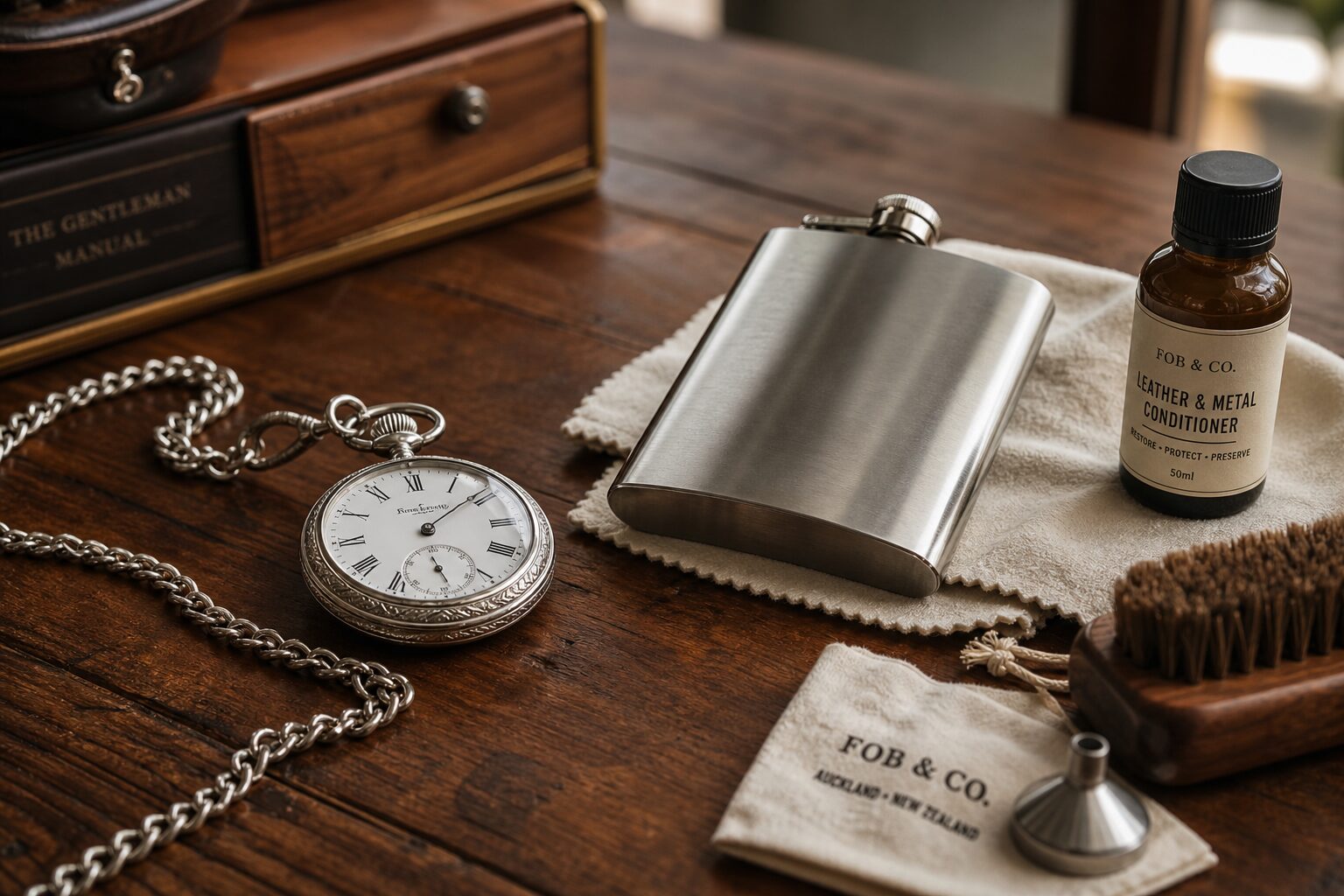
Choosing the Right Care Routine
The right care routine depends almost entirely on what your flask is made of and how it’s finished. Here’s how we’d break it down.
Stainless steel flasks
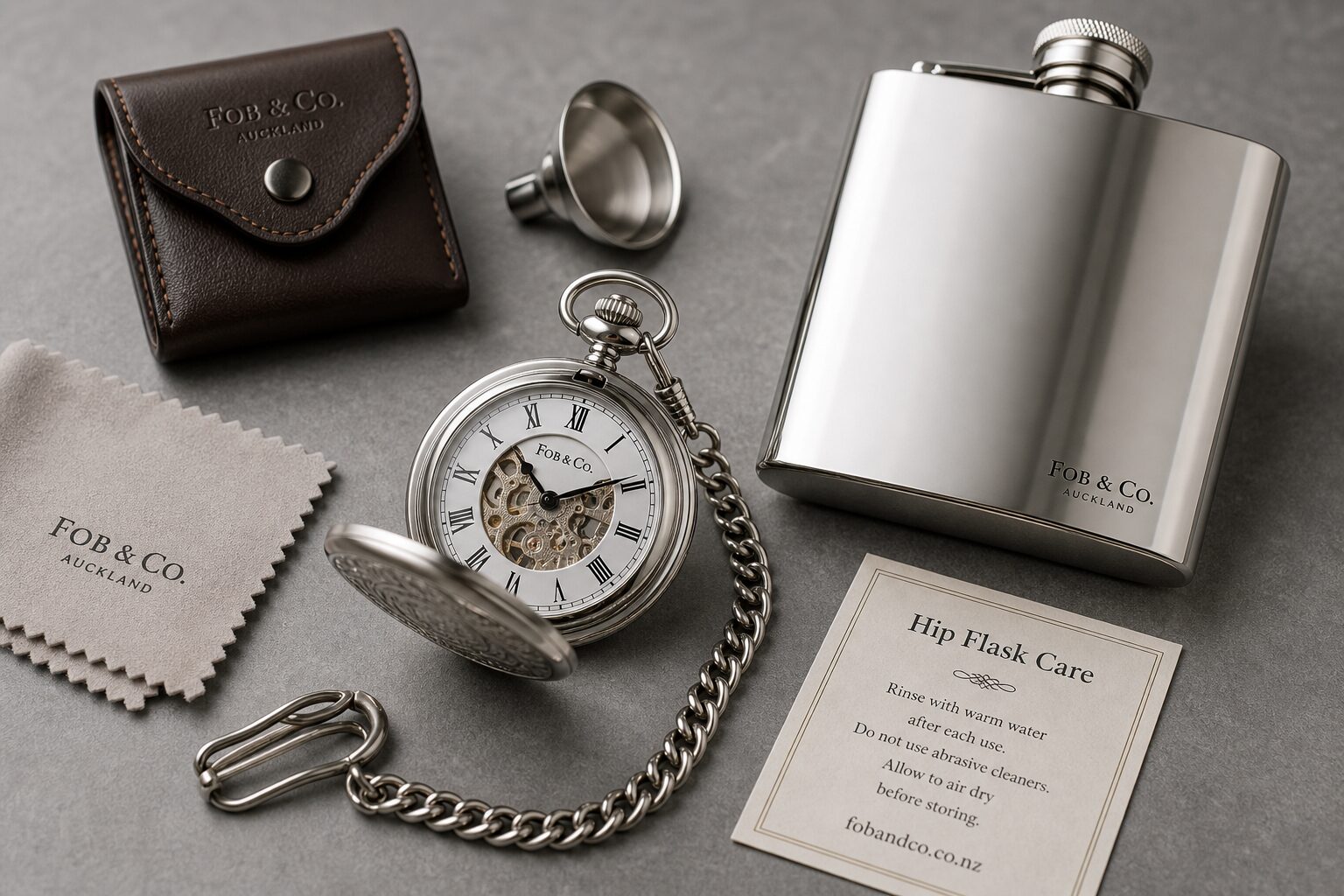
Most flasks sold in New Zealand are 18/8 stainless steel, which is a genuinely good choice for our climate because it resists corrosion far better than pewter or plated alternatives. After each use, rinse with warm water, no soap needed for a quick rinse, and leave it open to air dry. If it’s been sitting with spirits in it for more than a week or two, a teaspoon of bicarbonate of soda and warm water, swirled around and left for ten minutes, clears out residue that a rinse alone won’t touch. For a deeper clean, drop in a denture cleaning tablet with water, leave it overnight, then rinse thoroughly. It sounds odd but it’s the standard trick bartenders use on decanters too, and it works better than anything with a brush because you can’t actually get a brush down most flask necks.
Leather-wrapped flasks
Leather wraps look great and add grip, but they’re the part most likely to let you down in wet weather. If the leather gets soaked, don’t dry it near a heater or in direct sun, both will crack it. Pat it dry with a cloth and let it air dry naturally. A light leather conditioner every few months keeps it supple, particularly if the flask lives in a jacket pocket or car glovebox where temperature swings are common. Avoid submerging a leather-wrapped flask when cleaning; wipe the metal cap and spout instead of dunking the whole thing.
Pewter flasks
Pewter has a classic look but it’s softer and more reactive than stainless steel, so it’s worth avoiding acidic mixers altogether and sticking to straight spirits. Clean with a soft cloth and pewter-specific polish rather than anything abrasive, which will scratch the surface permanently.
Whatever the finish, check the cap gasket every so often. A perished rubber seal is the single biggest cause of leaks, and it’s a cheap fix rather than a reason to bin the whole flask.
Top Styles and Options
Capacity is the first real decision. A 6oz flask is easier to carry flat in a jacket pocket and suits occasional use, while an 8oz holds enough for a full round of nips without needing a refill halfway through a day out. For groomsmen gifts, 6oz tends to be the more popular pick simply because it sits better in a suit pocket for a wedding day.
Finish matters more in New Zealand than people expect. A brushed or matte stainless finish hides fingerprints and light scratching far better than a high-polish mirror finish, which shows every mark within a week of regular use. If you want something with a bit more presence, a leather-wrapped body with a stainless cap gives you the durability of steel with a warmer look for gifting.
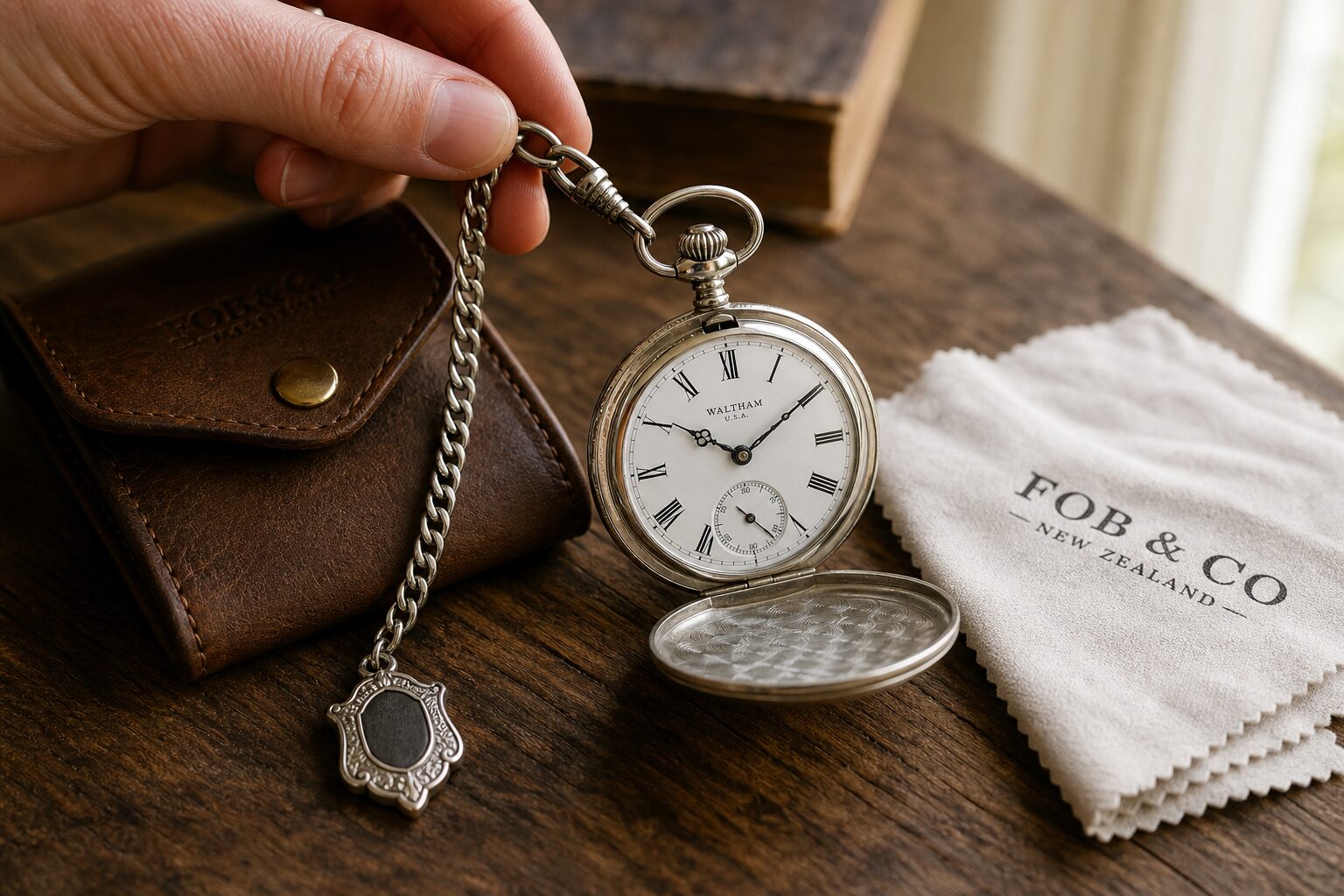
We pair flasks most often with accessories from our accessories range, and they sit naturally alongside a pocket watch for anyone putting together a proper groomsmen set. A classique pocket watch and a flask is a combination that’s held up as a gift pairing for decades, and for good reason, both are things a bloke will actually use rather than shove in a drawer.
What to Consider Before You Buy
A few things are worth checking before you commit to a flask, particularly if you’re buying for our climate rather than picking whatever looks good online.
Wall thickness. Thinner, cheaper flasks dent easily and are more prone to that metallic taste issue because there’s less steel between the liquid and the seam. If a flask feels light and tinny when you tap it, that’s usually a sign.
Seam construction. Look for a flask with a smooth, welded seam rather than a folded or crimped join. Folded seams are where leaks start first, especially once the flask has been through a few dishwasher cycles it was never meant to see.
Cap type. A screw cap with a captive hinge (so it doesn’t come loose and roll away) is worth the extra couple of dollars over a plain screw cap, particularly for anyone who’ll be using it outdoors, at the beach, on a boat, tramping, where a lost cap means a wasted flask.
Engraving. If you’re personalising a flask as a gift, laser engraving holds up far better over years of handling than a stick-on plate or deep hand engraving that can catch and lift with wear.
Budget. You don’t need to spend a fortune to get a flask that lasts. Our clearance section regularly has solid stainless options at a fraction of retail, and they’re the same base construction as full-price stock, just last season’s finish or packaging.
If you’re shopping for a full gift set rather than a flask on its own, browse the gifts collection, where flasks are commonly bundled with a half hunter pocket watch or a set of cufflinks. It’s a genuinely efficient way to sort groomsmen presents without ordering from five different places.
Tips From the Experts
A few habits separate people who get years out of a flask from people replacing one every eighteen months.
- Never put it in the dishwasher. The heat and detergent break down seals and dull the finish far faster than hand washing.
- Store it empty, not full. Long-term storage with spirits inside accelerates any corrosion at the seam and concentrates that metallic taste.
- Watch for condensation. If a flask has been in a cold car and comes inside to a warm room, condensation forms inside the neck. Leave the cap off for twenty minutes before sealing it back up.
- Salt air is the real enemy. If you’re near the coast, which covers most of New Zealand, rinse the exterior with fresh water occasionally too, not just the inside. Salt residue on a clip or hinge speeds up corrosion you won’t notice until it’s already pitted.
- Keep the original box. A padded box or pouch does more for a flask’s lifespan than any polish, because most damage comes from being knocked around loose in a drawer or bag.
One more thing worth knowing: if a flask ever picks up a persistent sulphur or “rotten egg” smell, that’s usually bacterial buildup from spirits sitting too long, not a fault with the metal. A denture tablet soak overnight almost always clears it. If the smell comes back within a day of cleaning, check the gasket, it’s likely perished and letting moisture sit trapped against the seam.
FAQ
What is the best hip flask care NZ?
The best routine for New Zealand conditions is a rinse after every use, air drying with the cap off, and an occasional bicarb or denture tablet soak to clear residue. Stainless steel flasks hold up best against our humidity and salt air, so they need the least intervention overall.
How do I know which hip flask care is right for me?
It comes down to the flask’s material. Stainless steel needs simple rinsing and the occasional deep clean, leather wraps need protection from sun and water rather than soaking, and pewter needs gentle polish and no acidic mixers. Match the care to the finish rather than using one method for everything.
What should I look for when buying a hip flask care?
Check the wall thickness, seam construction and cap type before buying, since these determine how easy the flask will be to maintain. A welded seam and a captive hinge cap will save you far more hassle over the years than a lower price tag on a flimsier build.
Are there budget-friendly hip flask care options?
Yes, care itself costs almost nothing, bicarb soda, warm water and the occasional denture tablet handle most maintenance. For the flask itself, our clearance range often has quality stainless options at reduced prices without any drop in build quality.


