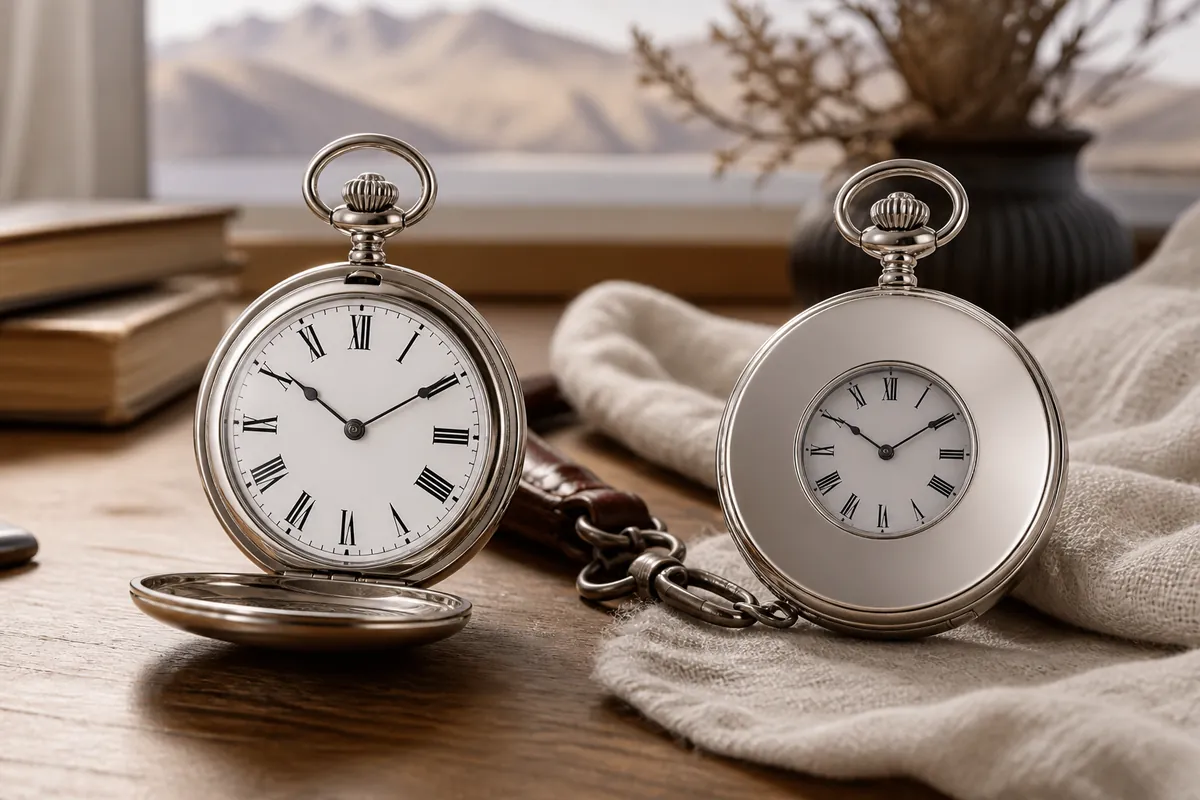
Pocket Watch Chain Styles and How to Attach Them
What Is a Pocket Watch Chain?
A pocket watch chain is the length of metal links (or occasionally leather) that runs between your watch and a fixed point on your clothing, usually a waistcoat button, belt loop, or lapel. Without it, a pocket watch is just an expensive thing rattling around loose in a pocket. With it, the watch has an anchor, and pulling it out to check the time becomes a proper little ritual instead of a fumble.
Chains go back to the 1700s, when pocket watches were the only portable timekeeper around and losing one to a hole in your coat was a genuinely expensive mistake. The habit stuck. Even now that most people check the time on a phone, a chain on a fob watch or nurses watch is what makes the whole thing look intentional rather than like a costume prop. If you’re new to the category, our guide to pocket watches and fob watches is a good place to start before you worry about chains at all.
The chain also does a practical job beyond safety. It sets how the watch sits, how far it can be drawn out to read, and whether it disappears into a waistcoat pocket cleanly or hangs a bit awkwardly. A chain that’s 5cm too long or too short changes how the whole outfit reads, which is why we’d rather you spend two minutes measuring than guess.
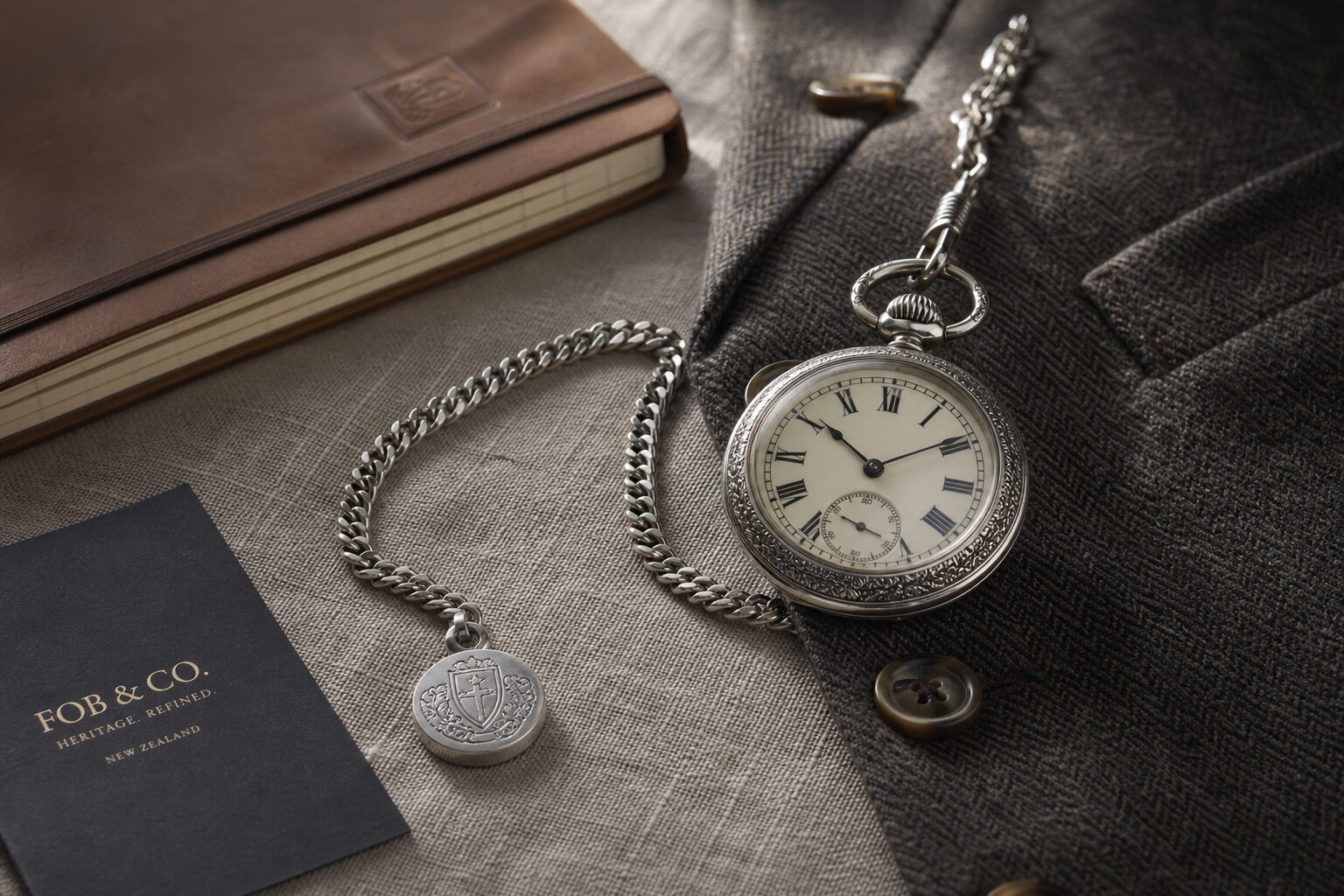
Choosing the Right Chain for You
Start with where the watch is actually going to live. Waistcoat pocket, trouser pocket, belt loop, or lapel each want a slightly different chain length and attachment. A waistcoat setup wants a chain that spans from the pocket, across the front, to the buttonhole two or three buttons up, usually somewhere between 30cm and 38cm depending on your build. A belt loop chain for casual or work wear (nurses watches fall into this camp a lot) can run a bit shorter, closer to 25cm to 30cm, since it’s not crossing the same distance.
Next, match the chain’s finish to the watch case. Gold-tone chains with gold-tone watches, silver or gunmetal with steel cases, and so on. It’s not a hard rule, mixed metals can look sharp if it’s clearly a deliberate choice, but matching is the safer default and it’s what most people expect from a proper set. Have a browse of the gold pocket watches range next to the chain options and you’ll see how the pairing works in practice.
Then think about how often the watch actually comes out. If it’s a daily-wear piece for work, you want a sturdy attachment, a solid T-bar or a well-made spring clip, because it’s going in and out of a pocket dozens of times a week and cheap fittings wear loose fast. If it’s an occasion piece for weddings or formal dinners, you’ve got more room to choose something decorative since it won’t see the same abuse.
Top Pocket Watch Chain Styles
There are really only a handful of chain families that matter, and most of the variation you’ll see is finish and link thickness rather than a genuinely new style.
Single Albert Chain
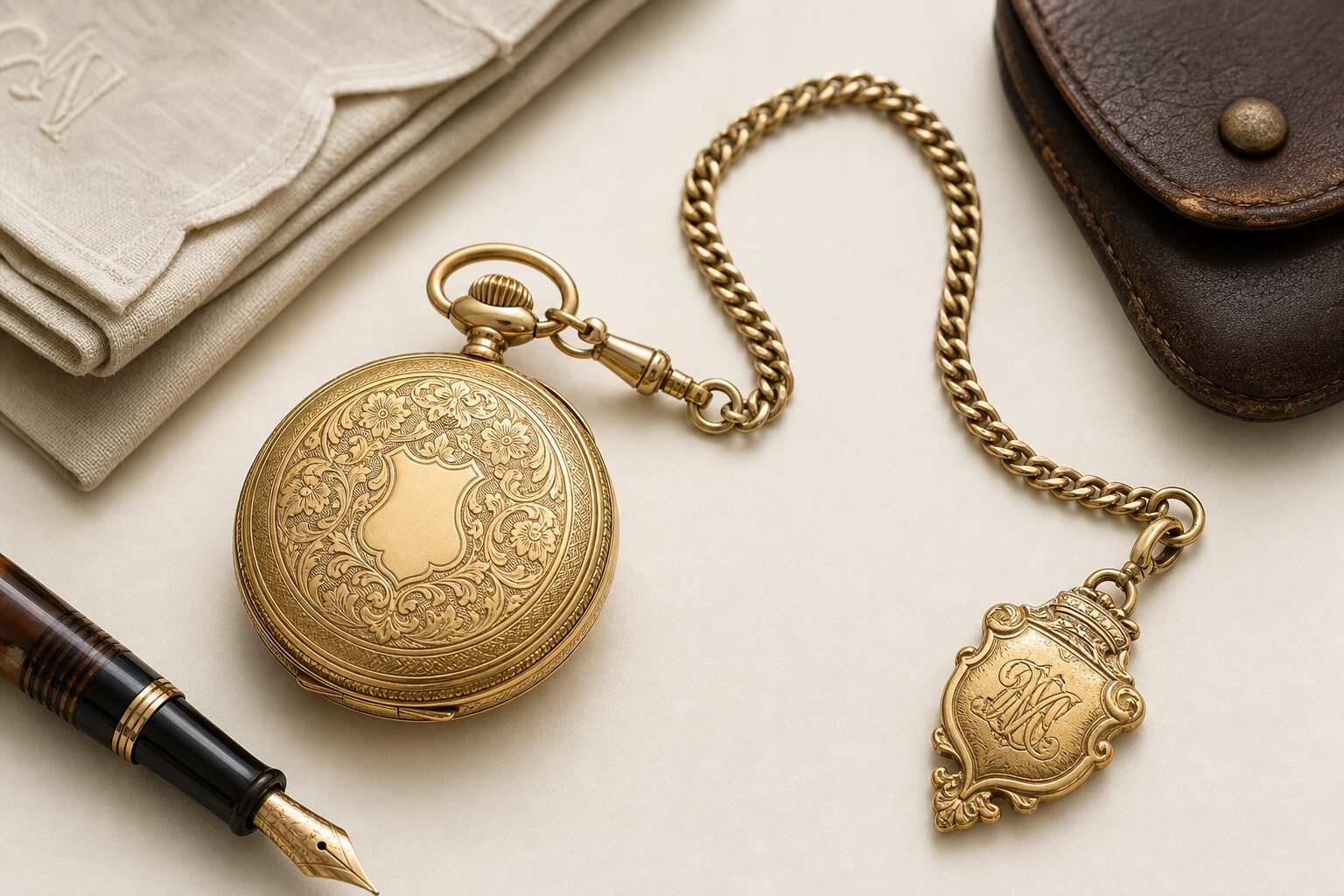
Named after Prince Albert, this is the standard: one length of chain with a T-bar at one end and a clip or swivel hook at the other, sometimes with a small decorative fob or medallion hanging off a middle ring. The T-bar goes through your waistcoat buttonhole, the watch clips to the other end, and it sits in the pocket. This is the everyday, all-purpose style and it’s what we’d point most first-time buyers toward.
Double Albert Chain
Same idea, but the chain runs from a central T-bar in two directions, one side to the watch, the other to a second fob, key, or matching ornament, with both ends tucked into separate waistcoat pockets. It reads as more formal and a bit more old-world, which is why you tend to see it at weddings. Have a look at our double hunter pocket watches if you want the chain and case style to match at that level of formality.
Curb Chain
Flat, interlocking links that lie close together rather than the looser oval links of an Albert chain. It gives a heavier, more industrial look and tends to suit brass or gunmetal cases better than delicate gold ones. Good option if the rest of the outfit is already fairly rugged, think waistcoats worn with boots rather than a three-piece suit.
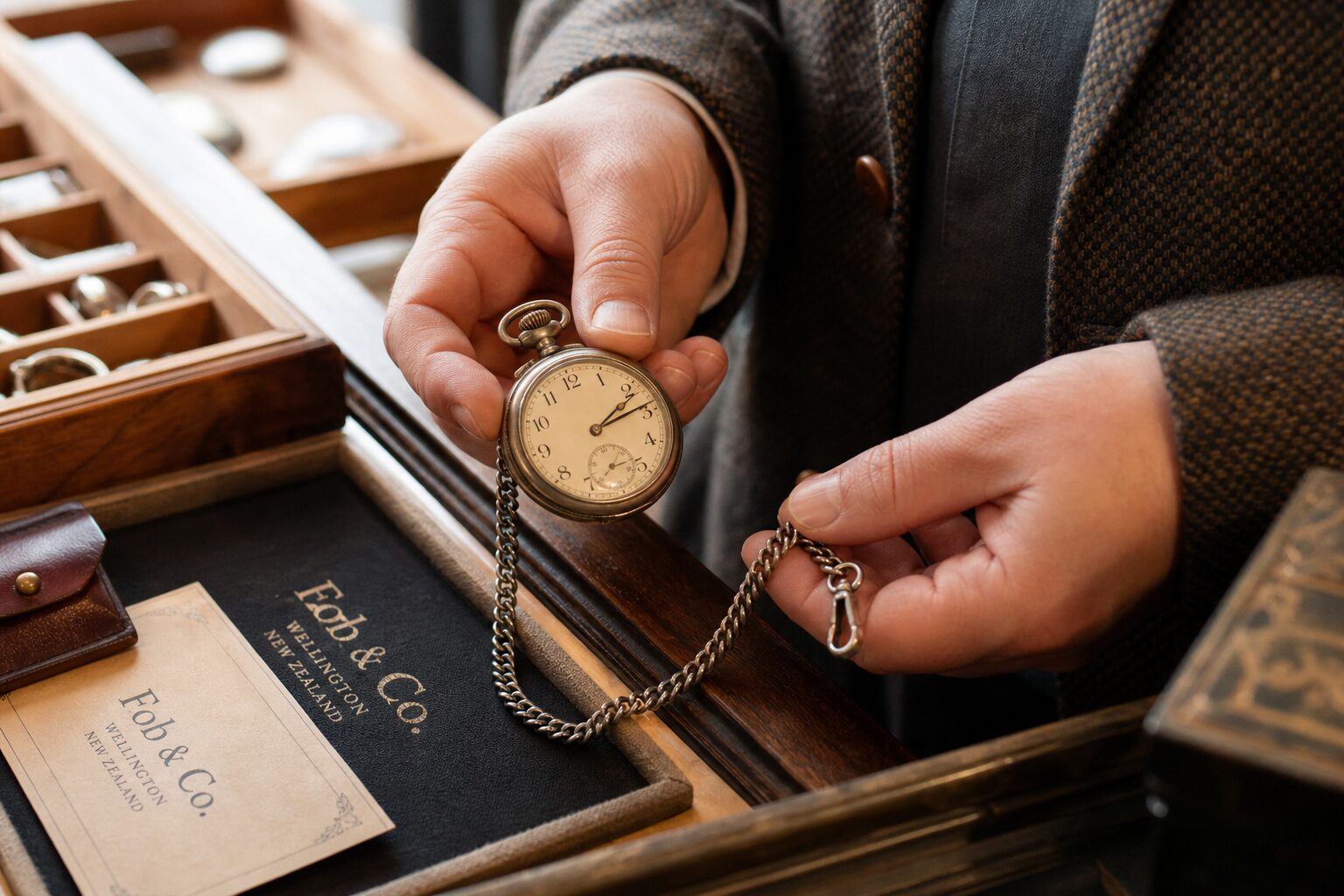
Vest (Waistcoat) Chain With T-Bar
This isn’t a separate chain style so much as the classic attachment method, worth calling out on its own because it’s the one most people get wrong. The T-bar is a short horizontal bar that slots through the buttonhole and sits flat against the fabric, so the chain can’t slip back through. Push it through at an angle, straighten it once it’s through, and it’ll hold all day without you thinking about it again.
Belt Loop or Lapel Clip Chain
A shorter chain finished with a sturdy lobster clasp or spring-loaded clip instead of a T-bar, made to hook straight onto a belt loop or a jacket lapel. This is the practical choice for nurses watches and any fob watch that needs to survive a full shift of movement rather than sitting still in a waistcoat pocket. Check the chain range for clip and clasp styles built for exactly this kind of daily use.
Rope and Fancy Link Chains
Twisted rope-style chains and other decorative link patterns show up more on fashion-forward or vintage-inspired pieces. They’re less about function and more about giving a plain fob watch a bit of visual interest. Worth considering if your watch case itself is fairly understated and you want the chain to do some of the talking.
What to Consider Before You Buy
Length first, always. Measure from where the watch will sit (pocket opening or belt loop) to the buttonhole or attachment point you’re planning to use, add a little slack for comfortable movement, and buy to that number rather than guessing off a photo. A chain that’s too short will drag the watch face upward and strain the fitting; too long and it swings around and catches on things.
Second, check what the chain is actually attached to on the watch end. Most modern fob and pocket watches use a spring ring or a small swivel clip on the case, and you want the chain’s end fitting to match that mechanism cleanly rather than needing to be forced. If you’re buying a watch and chain separately rather than as a set, it’s worth confirming compatibility before you check out, particularly with older or antique-style cases like our full hunter and half hunter pocket watches, which sometimes use slightly different loop sizes to modern open-face cases.
Third, material and weight. Brass chains are lighter, cheaper, and tend to darken slightly with age unless they’re plated well, which some people actually prefer for a lived-in look. Stainless steel and gunmetal chains hold their finish longer and suit daily-wear pieces. If budget is the main driver, our brass pocket watches paired with a matching brass chain give you a full set for a fraction of what a gold-plated equivalent costs.
Finally, think about who it’s for if this is a gift. A groomsman getting a fob watch for a wedding day probably wants a clean single Albert chain that photographs well and works with a rented waistcoat. A nurse getting a practical timepiece for shift work wants a short, tough clip chain that isn’t going anywhere near a buttonhole. Our gifts range has curated sets that already pair the right chain with the right occasion, which saves the guesswork if you’re buying for someone else.
Tips From the Experts
Watchmakers and menswear historians generally agree on one thing: proportion matters more than shine. A chain that’s the right length for your frame and waistcoat cut will look better in cheap brass than an expensive gold chain hanging the wrong length. The Albert chain’s design has barely changed since the 1840s precisely because the proportions were right the first time.
On maintenance, a light wipe with a dry cloth after wear keeps tarnish off brass and plated chains, and it takes about ten seconds. Avoid leaving chains in a damp pocket or bathroom cabinet, humidity is what actually causes the dulling most people blame on “cheap metal.”
On attaching the T-bar, resist the urge to force it through a tight buttonhole side-on. Turn it vertically, feed the short end through first, then rotate it flat once it clears the fabric. Do this once properly and you won’t be wrestling with it every morning.
If you’re outfitting a wedding party, buy chains slightly on the longer side rather than shorter. It’s far easier to tuck extra length neatly into a pocket than to deal with a chain that won’t reach the buttonhole on a taller groomsman. And if a set feels tired after the big day, our clearance range is worth checking for standalone chains at a lower price point if you just need replacements.
Frequently Asked Questions
What is the best pocket watch chain in NZ?
For most people a single Albert chain with a T-bar attachment is the best all-round choice, since it works for both everyday wear and formal occasions. If you want something more decorative for a wedding, a double Albert chain gives a fuller, more traditional look. Our pocket watch chains range has both styles in a few finishes to compare side by side.
How do I know which pocket watch chain is right for me?
It comes down to where you’re wearing it and how often. Waistcoat wear for formal occasions suits a longer Albert chain with a T-bar, while daily or shift wear suits a shorter chain with a sturdy clip for a belt loop. Measure the distance from your pocket to the attachment point before you buy so the length is right rather than guessed.
What should I look for when buying a pocket watch chain?
Check the chain length against your intended use, the finish against your watch case (gold, silver, or gunmetal), and the end fitting against your watch’s loop or spring ring so it actually connects. A sturdy T-bar or clip matters more than decoration if the watch will be handled daily.
Are there budget-friendly pocket watch chain options?
Yes, brass chains are the most affordable option and still hold up well with basic care. Pairing one from our brass pocket watches range keeps the whole set consistent in finish, and our clearance section is worth a look for discounted chains and sets outside of new-season stock.