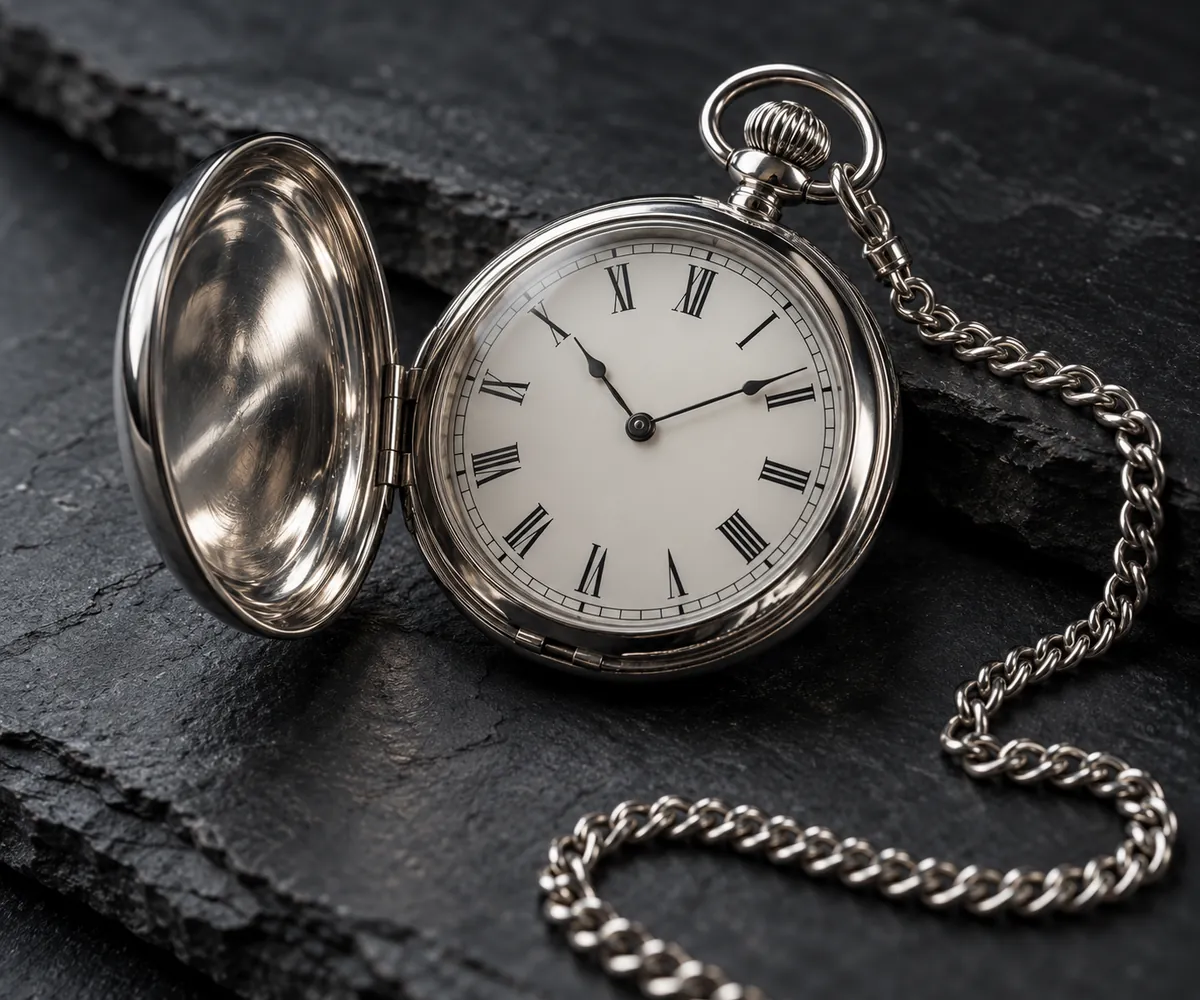
How to Display a Pocket Watch at Home: Stands, Frames and Shelf Ideas in New Zealand
Why Display a Pocket Watch at All?
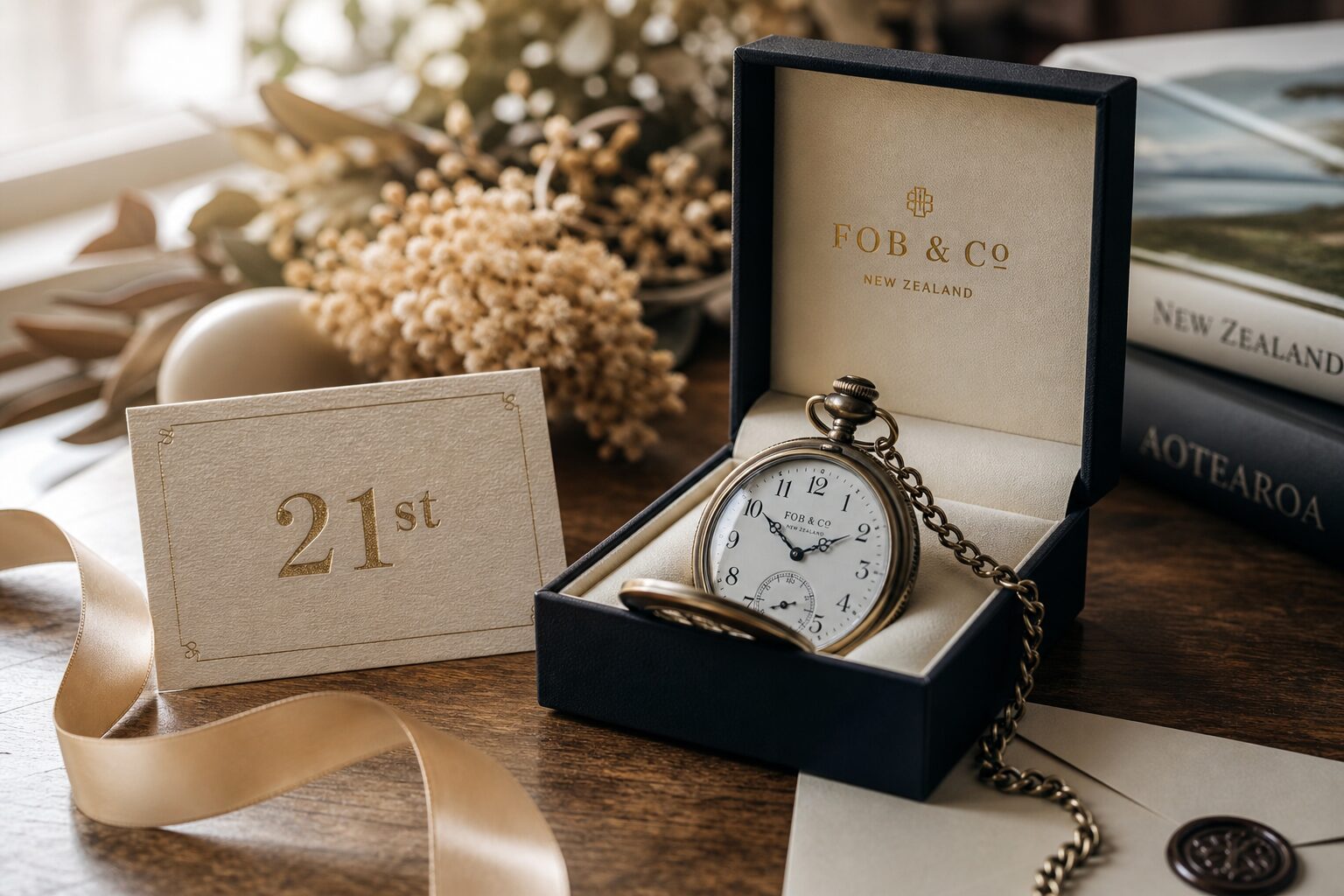
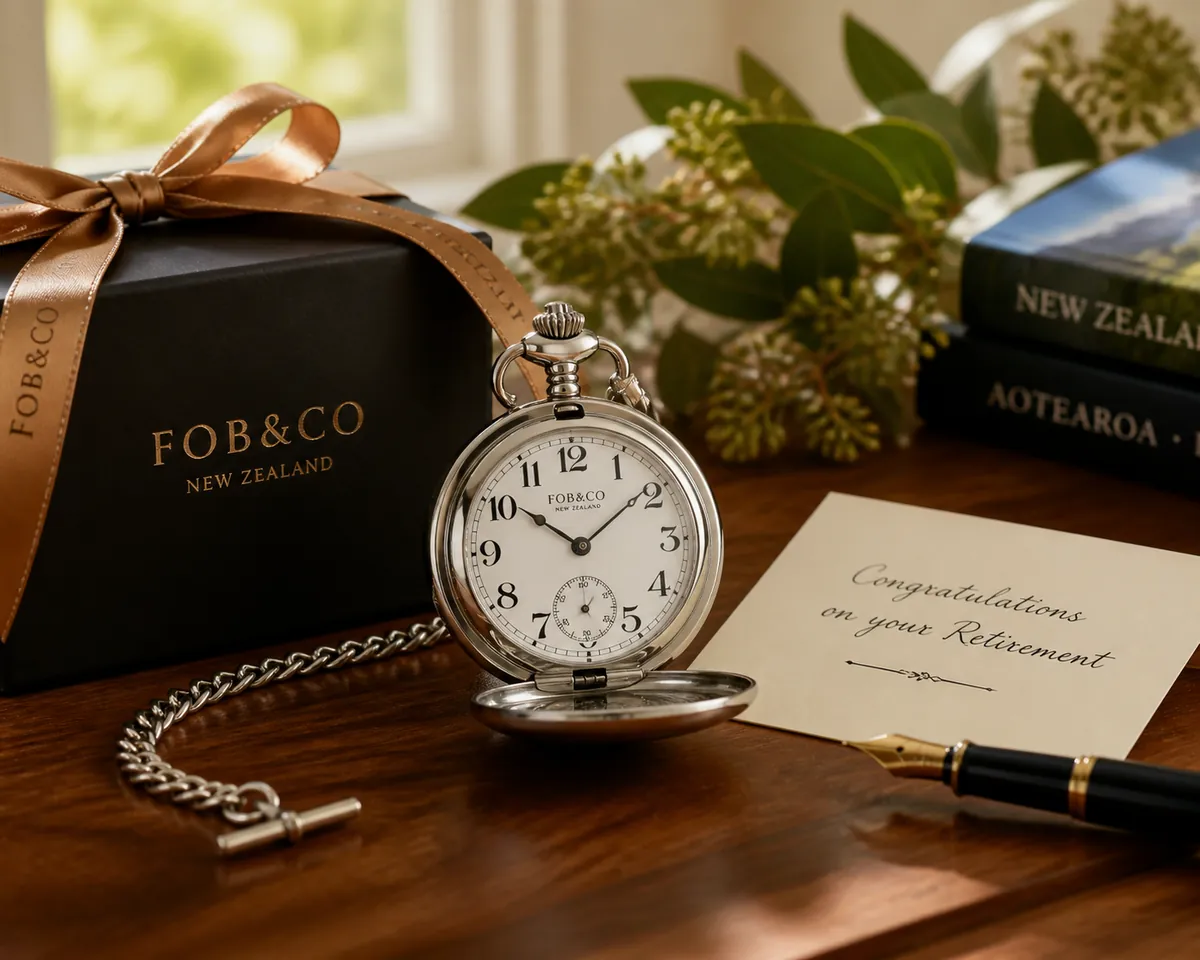
Most pocket watches end up in a sock drawer. Someone inherits one, or gets one as a gift, and it lives in a velvet pouch next to the spare batteries until the next house move. That’s a shame, because a pocket watch is one of the few small objects that’s genuinely good to look at: a dial, a case with engraving or a hunter cover, a chain with some weight to it.
Displaying it properly does two jobs. First, you actually see it, which is half the point of owning something like this. Second, you stop it getting knocked around. Loose watches pick up scratches on the crystal, dents on the case edge, and tangled chains that scuff the metal. A dedicated spot fixes all three.
The pocket watch itself has been around since the 16th century, according to the Wikipedia entry on pocket watches, and it was the standard way to carry time for hundreds of years. Something with that much history deserves better than a drawer.
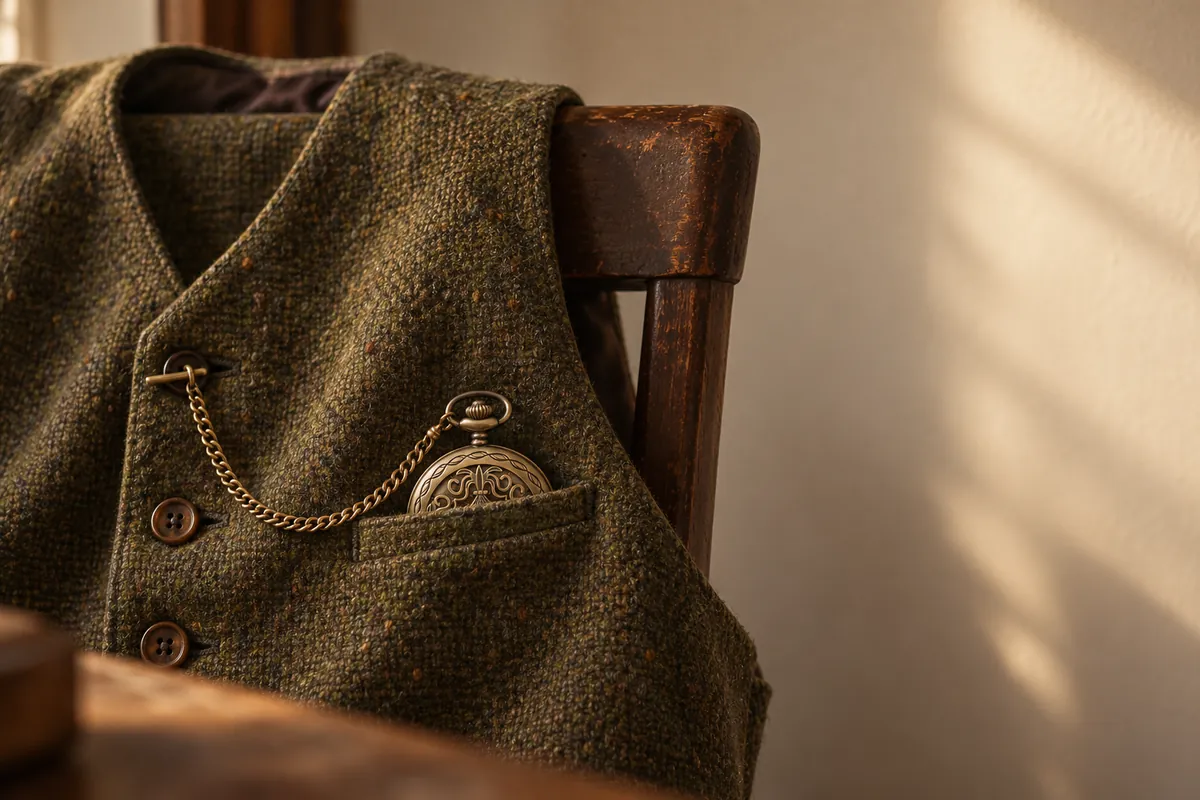
Choosing the Right Display Method
Start with one question: do you still use the watch? If it goes in a waistcoat pocket for weddings and the odd dinner, you want a display that makes it easy to pick up and put back. A glued-down frame is the wrong answer. If it’s a keepsake that won’t leave the house again, a sealed frame is fine and arguably better.
Daily-use pieces
Go for a stand or a open tray. You want two seconds between “I’m heading out” and the watch being in your pocket. A small easel-style stand or a cradle with a hook for the chain does this well. Put it on a dresser or hallway table near where you keep your keys, and it becomes part of the routine.
Keepsakes and heirlooms
For a grandfather’s watch with a story attached, a shadow box frame is hard to beat. You can mount the watch, the chain, a photo, maybe a service medal or a folded note. It hangs on the wall, stays dust-free, and nobody has to handle it. The trade-off is that you won’t be winding it, so decide that up front.
Collections
Three or more watches change the maths. A single stand per watch eats shelf space fast. A glass-top case with a padded insert, or a floating shelf with individual stands under a dome, keeps things tidy. If you’re building a collection by case style, say a few half hunters next to a full hunter, a row layout looks deliberate rather than cluttered.
Top Styles and Options
Upright watch stands
These are the simplest option and still the most popular. A wood or metal stand holds the watch upright at a slight backward angle so the dial faces you. Walnut and oak suit most rooms. Brushed brass stands pair nicely with brass pocket watches, since the metals echo each other without matching exactly. Expect to pay anywhere from about $15 for a basic one up to a few hundred for hand-turned timber.
Cradle and chain stands
A cradle stand holds the watch lying slightly reclined and lets the chain drape over a curved bar or into a small dish. This shows off the chain, which is half the appeal. If you’ve spent time choosing something from the pocket watch chains range, a stand that lets it hang properly is worth the extra dollars.
Shadow box frames
Look for a box depth of at least 30 mm. A standard pocket watch runs roughly 45 to 52 mm across and sits 12 to 18 mm thick, and a hunter case with its cover open needs room to swing. Shallow photo frames will crush or tilt the watch. Line the back with acid-free card or felt, and fix the watch with a small cradle or a loop of soft cord rather than pins through the chain loop.
Floating shelves and mantels
A short floating shelf at eye height, with a stand on top, works well in a lounge or study. Mantels are tempting, but if you have a working fire the heat is a problem. Keep watches off anything that gets warm.
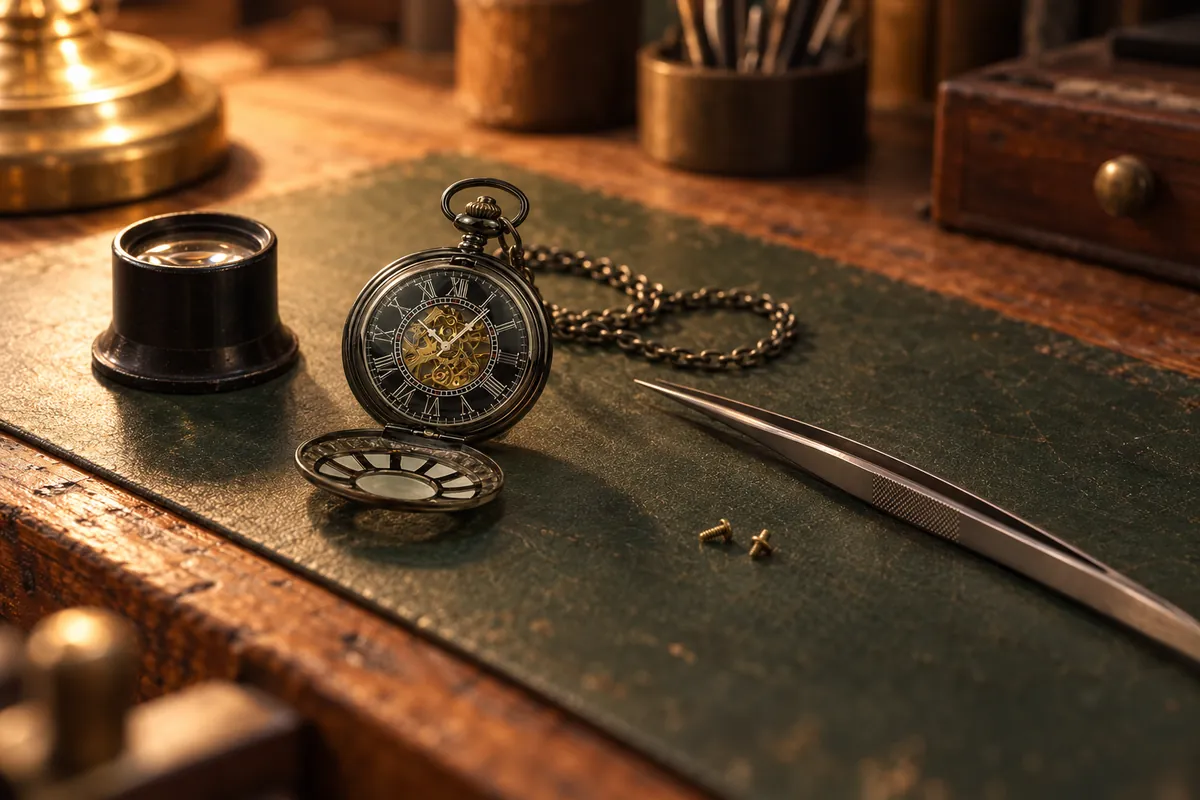
Glass domes and display cases
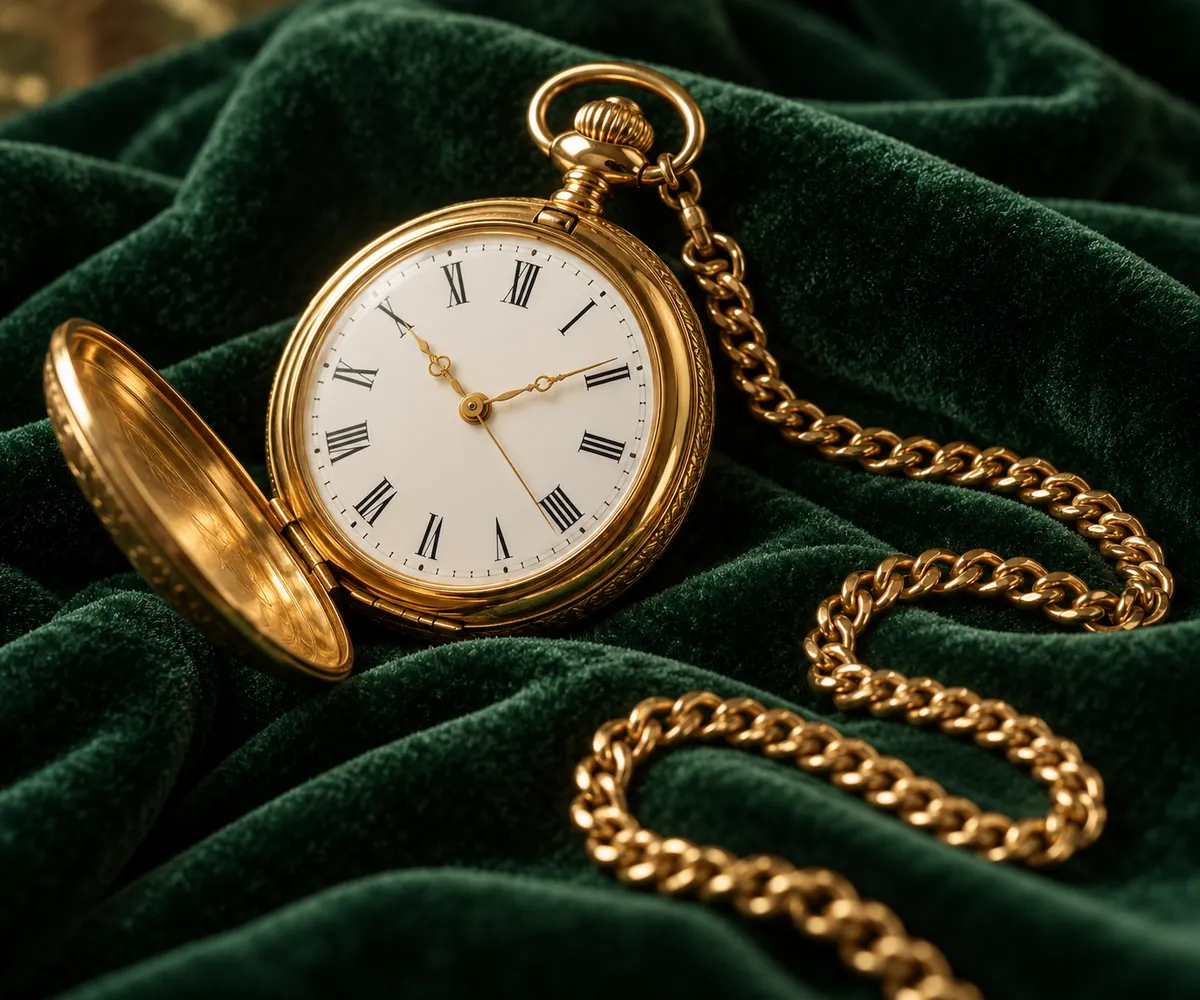
A small glass dome over a wooden base looks like a museum piece and keeps dust off. Glass-top cases with a velvet or suede insert hold anywhere from one to twenty-four watches. For a single gold pocket watch that you want to show off, a dome on a bookshelf does more than any amount of styling.
Matching the style of the case
Case type affects how you display it. A half hunter shows its dial through a window in the cover, so it looks good closed, standing upright. A full hunter hides the dial completely, so you either display it closed to show off the engraved cover or propped open. A double hunter opens at the front and back, which suits a cradle or a frame where you can see the movement side.
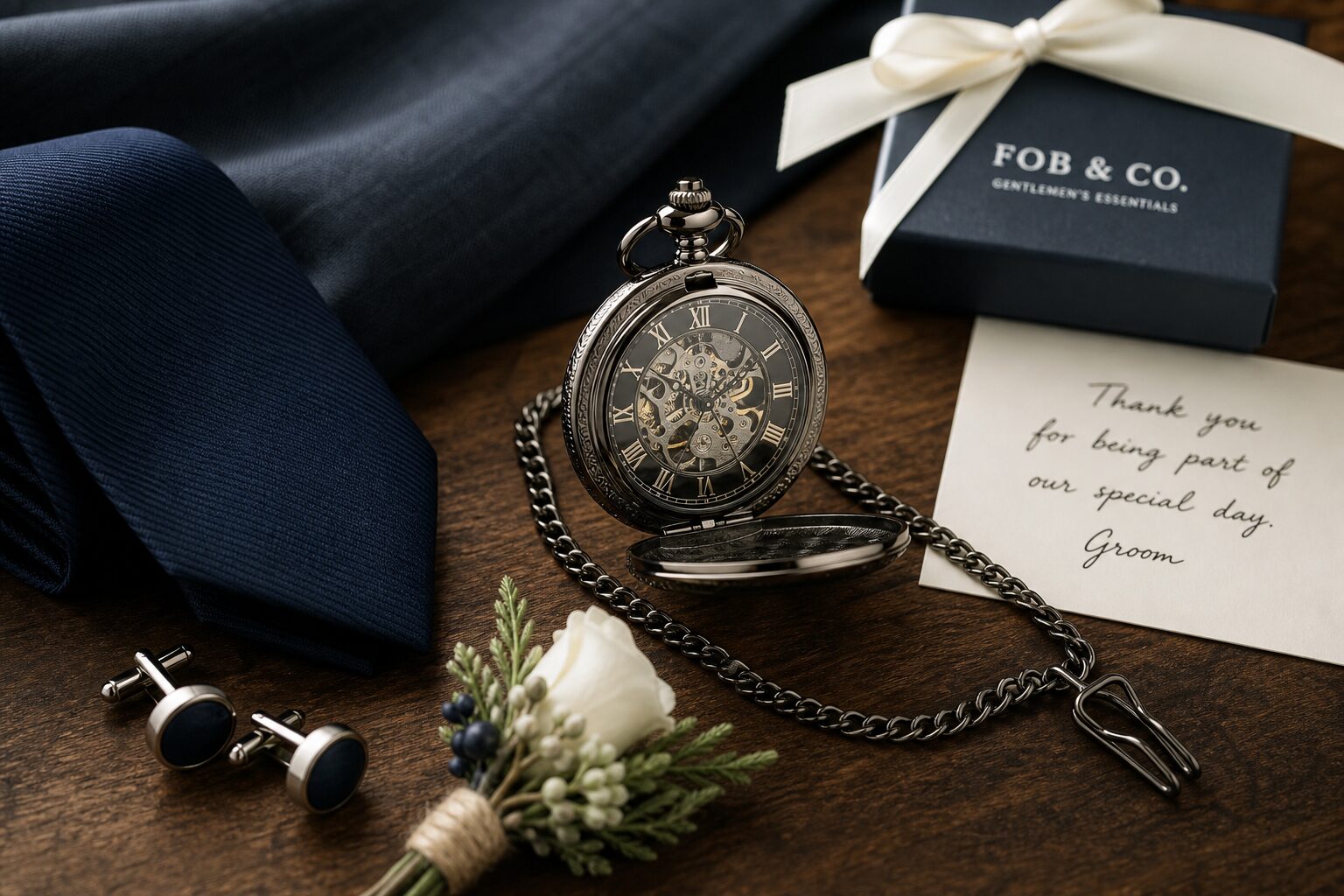
Darker finishes behave differently on a shelf. A black pocket watch disappears against a dark wood stand and pops against pale oak or white. A bronze pocket watch looks warmer on green or navy felt than on anything beige.
What to Check Before You Buy
Size and fit
Measure the watch case diameter and the thickness, including the crown and bow (the ring at the top). A stand that’s 5 mm too narrow will tip. A cradle too deep will hide the bottom of the dial. If you’re buying a stand as a gift without the watch to hand, pick an adjustable one.
Materials that touch the watch
Soft felt, microfibre or suede is fine. Rough timber, bare metal edges and cheap foam are not. Some cheap foam and untreated card release acids and fumes over time, which can dull brass or tarnish silver. Acid-free materials cost a little more and are worth it for anything you care about.
Light
Sunlight is the thing most people forget. Ultraviolet light fades dials, yellows lume and dries out leather straps or cases. The Wikipedia overview of ultraviolet radiation explains why it’s more damaging than visible light, and New Zealand’s UV levels are notably high in summer. A north-facing windowsill is about the worst place you could put a watch. If you want a frame on a bright wall, use UV-filtering acrylic or glass.
Humidity and salt air
If you live near the coast in Wellington, Auckland, Tauranga or Dunedin, salt and damp are real. Relative humidity above about 60 percent for long stretches encourages tarnish and, inside the case, corrosion. The Wikipedia page on relative humidity is a decent primer on what the number means. A cheap hygrometer costs under $20 and tells you if a room is a bad choice. Bathrooms and kitchens are out. Tuck a silica gel sachet into closed frames and cases.
Earthquakes
This is the New Zealand-specific one. A watch standing on a loose stand on a shelf will walk off in a decent shake. Use a small dab of museum putty or a non-slip pad under the stand, and choose cases and domes with a lip or a locking base. For wall frames, use two hooks, not one.
Budget
A sensible split for a single watch: spend as much on the display as you’d spend on a nice pair of shoes if it’s an heirloom, and around $20 to $40 if it’s a casual piece. If you’re buying watches too, the clearance section is a good place to find a piece that you can display straight away without worrying about it being precious.
Expert Tips for Safe Display
Rotate the watch. If it’s a mechanical piece, wind it gently once every few weeks and let it run a day. Oils in the movement settle and thicken if it sits for years. The mainspring is the part doing the work, and it’s happier being used occasionally than left fully wound for months or fully run down forever. Don’t force the crown if it feels tight.
Stand it dial-out and slightly back. Around 15 to 20 degrees off vertical looks natural and keeps the weight on the base, not on the bow.
Don’t hang it by the chain alone. A watch hanging from a hook for months stresses the bow and the first link. A stand or cradle takes the load. If you want the hanging look, support the watch body on a small shelf underneath.
Keep the chain tidy. A tangled chain scratches the case. Drape it in a loose S-curve or coil it on a small tray beside the stand. A T-bar or an Albert chain looks best with a gentle curve, not a pile.
Group by height. If you’re displaying more than one, vary the heights using stands, a small block or a book underneath. Odd numbers (three or five) look better than pairs.
Pair it with something personal. A pocket watch next to a framed photo of whoever it came from tells a story. A single watch on its own is just an object. If it’s a gift in the making, the dad pocket watches and gifts pages are worth a look, especially if you’re thinking about giving a watch and a stand together.
Dust with a soft brush. A clean makeup brush works. Skip polishing cloths with chemical treatments unless the watch is plain metal with no lacquer. If the case has a lacquered finish, a dry microfibre cloth is plenty.
Look at the watch every month. It takes thirty seconds. Check for green or white spots on brass, cloudy glass, or condensation under the crystal. Catch these early and the fix is simple. Leave them and it isn’t.
Frequently Asked Questions
What is the best way to display a pocket watch?
For most people it’s a small upright or cradle stand on a dresser or shelf away from direct sun. It keeps the dial visible, takes the weight off the bow, and lets you grab the watch when you need it. If the watch is a keepsake you won’t wear again, a deep shadow box frame is the better pick.
How do I know which display style is right for me?
Ask whether you still use the watch and how many you own. One watch you wear a few times a year suits a stand, one heirloom suits a frame, and three or more suit a glass-top case or a shelf with a dome. Then check the room for sun and damp, because those matter more than looks.
What should I look for when buying a pocket watch display?
Check the internal size against your watch (most run 45 to 52 mm across), look for soft, acid-free lining, and make sure the base is weighted or can be fixed down for earthquakes. For frames, a depth of at least 30 mm and UV-filtering glass are worth paying for.
Are there budget-friendly pocket watch display options?
Yes. A simple wooden stand can cost $15 to $25, and a deep box frame from a framing shop or craft store can be lined with felt for under $40. Skip anything with rough foam or bare metal edges, since cheap and gentle on the watch aren’t always the same thing.
If you’re still choosing the watch itself, have a browse of the full pocket watch and fob watch collection, or start from the Fob & Co home page.