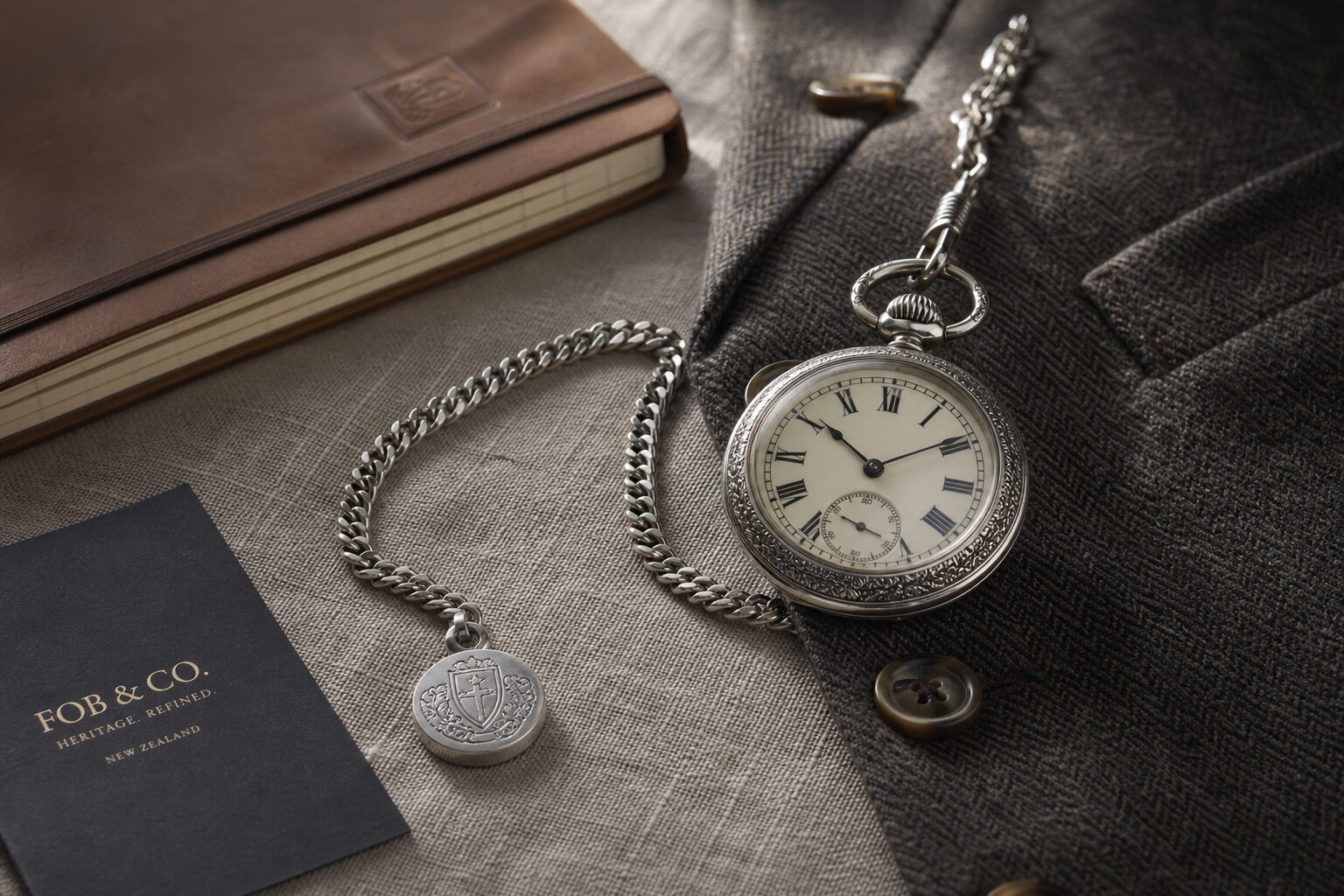
How to Wind and Maintain a Pocket Watch Long-Term
What Is Pocket Watch Maintenance and Why It Matters
Pocket watch maintenance is really just three habits stacked on top of each other: winding it properly, keeping it away from things that damage a movement, and getting it serviced by someone who knows what they’re doing before it actually breaks. That last part trips people up. Most owners wait until the watch stops, and by then the dry, gritty oil inside has already chewed through the pivots. A mechanical movement has somewhere between 100 and 200 tiny parts working against each other tens of thousands of times an hour, so a bit of upkeep isn’t optional if you want the thing to last.
We sell a lot of pocket watches to blokes buying one for a wedding who then come back two years later asking why it’s running slow. Nine times out of ten it’s not a fault, it’s just overdue for a clean and oil. A pocket watch that’s properly maintained can run accurately for decades. One that’s ignored will start losing minutes a day within a couple of years, and eventually seize up altogether.
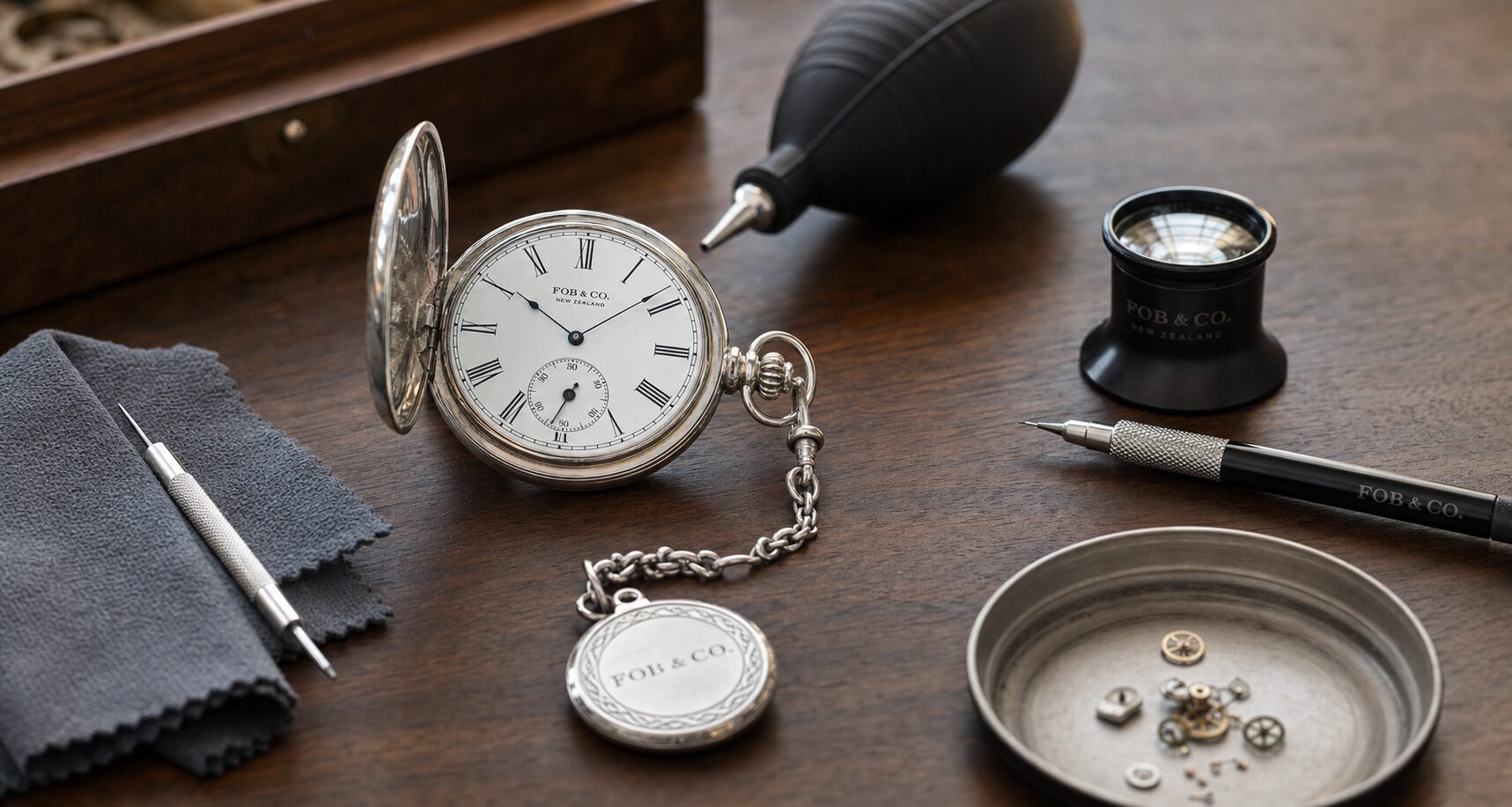
Here’s the bit nobody tells you when you buy your first one: mechanical watches are meant to be wound, worn and used. Leaving a pocket watch sitting in a drawer for years doesn’t preserve it, it just lets the old lubricant thicken and gum up the gear train. A watch that gets regular use and a proper service schedule will genuinely outperform one that’s been “kept safe” and never touched.
How to Choose the Right Maintenance Routine
The right routine depends on whether you’ve got a manual wind, an automatic, or a quartz pocket watch, and NZ households don’t always know which one they own. Manual mechanical movements need winding by hand, ideally at the same time every day so the mainspring tension stays consistent. Twenty to thirty turns of the crown is usually plenty, and you’ll feel resistance build up near the end. Stop there. Forcing it past that point is the single fastest way to snap a mainspring.
Automatic pocket watches are rarer than automatic wristwatches because there’s no wrist motion to wind them, so most “automatic” pocket watches on the market are actually manual wind dressed up in a hunter case. Check the caseback or ask before assuming otherwise. Quartz pocket watches need a battery change every one to two years and basically nothing else, which is why they’re popular as everyday gifts rather than heirloom pieces.
Whichever type you’ve got, keep it away from magnets. Phones, laptop speakers and fridge magnets can magnetise the hairspring in a mechanical movement, and a magnetised watch will suddenly start gaining ten or twenty minutes a day for no obvious reason. If that happens, it’s a five-minute fix at a watchmaker’s, not a sign the watch is dying.
If you’re buying new and want something built for long-term wear rather than a one-off event, browse the Classique range or check the clearance section if budget’s the main driver. Both are solid starting points because they use widely available movements that any competent watchmaker can service.
Top Pocket Watch Styles and Options
Style affects maintenance more than people expect. A full hunter case, with its hinged front cover, keeps dust and pocket lint off the crystal and dial, which genuinely extends the life of the movement underneath. Half hunter cases give you a small viewing window in the cover so you can check the time without opening it fully, a nice middle ground if you like the protection but check the time constantly. Open face watches with no cover look sleeker but pick up more grime day to day, so they need a wipe-down more often.
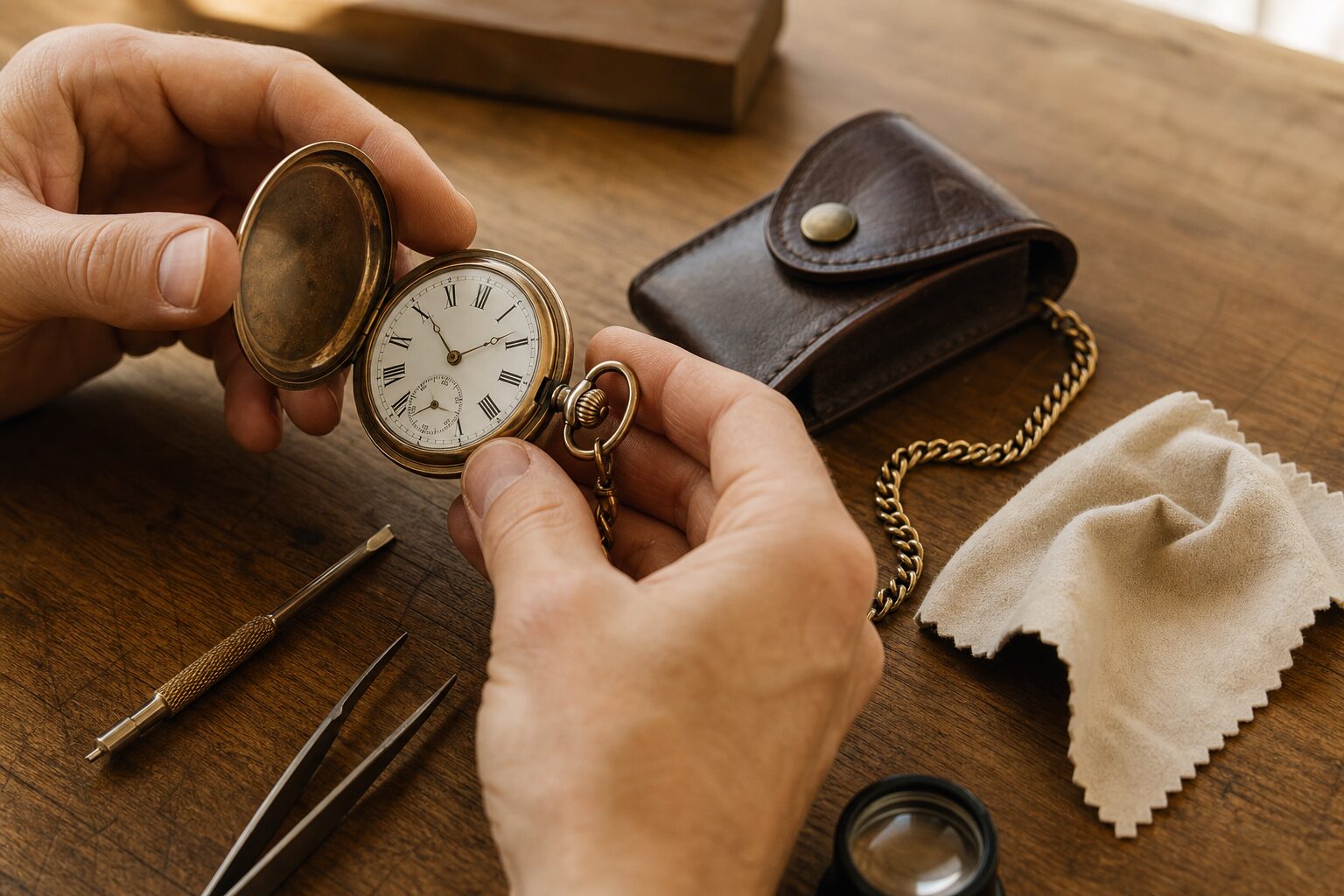
Material matters too. Brass pocket watches tarnish faster than gold-plated ones and need an occasional polish to stop the case looking dull, but brass is also cheap to replace if the case gets knocked around. Bronze pieces develop a patina over time that most collectors actually want, so don’t over-polish those or you’ll strip the character straight off them. Gold and gold-plated watches hold their finish longest with the least fuss, which is part of why they’re the traditional choice for a watch meant to be handed down.
If you want something with a bit more presence, a double hunter, with covers on both the front and back, gives the most protection of any style because the movement is sealed on two sides instead of one. It’s the style I’d point a first-time buyer toward if they’ve told me they’re rough on their belongings.
What to Consider Before You Buy
Before you buy, think about how often you’ll actually carry it. A watch worn daily and wound every morning tends to run better long-term than one saved for special occasions, because the oils inside stay distributed rather than pooling and drying out in one spot. If you’re buying for a wedding or as a groomsmen gift, check our gifts range for sets that come with a matching chain and box, since a proper case does a lot of the protective work for you between wears.
Ask about the movement before you buy, not after. A watch built around a well-known movement is far easier to get serviced in New Zealand than an obscure or decorative one, because parts and expertise are easier to source. It’s worth asking us directly if you’re unsure, we’ll tell you straight whether a particular piece is easy to maintain or better suited to occasional display.
Also budget for the accessories that protect the watch day to day. A soft pouch or fob case cuts down on scratches from keys and coins sitting in the same pocket, and a properly fitted chain or fob accessory stops you dropping the watch altogether when you take it out to check the time. That last one sounds obvious until you’ve heard how many watches end up needing repair after a fall from waist height onto tile.
Set aside a bit of money for servicing too. A clean and oil every three to five years typically runs a fraction of what a full repair costs once neglect turns into actual wear on the pivots and jewels. Treat it the same way you’d treat a car service, small and regular beats large and reactive.
Tips From the Experts
Watchmakers tend to say the same three things, in roughly this order. First, wind at the same time daily rather than randomly through the week, because consistent tension is easier on the mainspring than sporadic full winds. Second, never wind or set the time while the watch is off your body or lying on a hard surface if you can help it, the shock from bumping the crown against a table can bend the stem. Third, get it serviced on a schedule rather than waiting for symptoms, because by the time a watch visibly slows down, the dry lubricant has usually already scored the pivots.
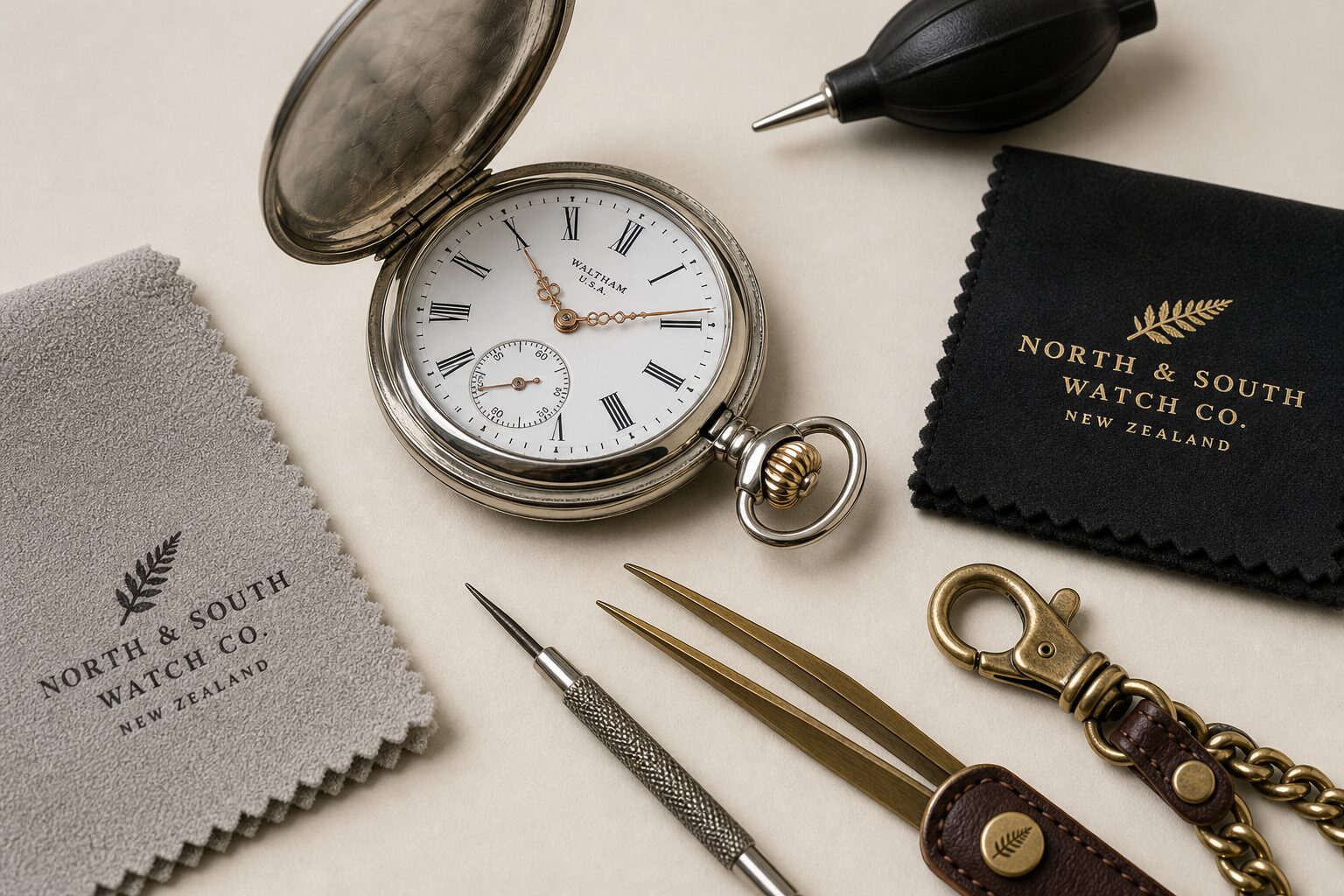
A few smaller habits add up over the years. Wipe the case with a soft, dry cloth after wear, especially in humid NZ summers when sweat and moisture sit on metal longer than you’d think. Avoid opening the caseback yourself, even just to peek at the movement, since dust getting into an open case is a common cause of premature wear that owners don’t even realise they’ve caused. And if the watch takes a hard knock, get it checked even if it’s still ticking. A bent balance staff or a hairline crack in the crystal won’t always stop the watch immediately, but both get worse with time.
Storage matters more than most people think. A watch box or drawer away from direct sunlight and away from strong magnetic fields (subwoofer speakers are a sneaky culprit) will do more for long-term accuracy than almost anything else on this list. Humidity is the other enemy, so a silica gel packet in the drawer is a cheap bit of insurance in coastal NZ homes.
FAQ
What is the best pocket watch maintenance routine?
The best routine is simple: wind a manual movement at the same time each day, keep it away from magnets and moisture, and get a professional clean and oil every three to five years. Consistency matters more than any single trick, a watch that’s handled the same way daily will outlast one that gets sporadic, heavy-handed attention.
How do I know which maintenance routine my watch needs?
It comes down to your movement type. Manual mechanical watches need daily winding and periodic servicing, quartz watches just need a battery swap every year or two, and hunter-case styles need less frequent cleaning than open face because the cover keeps dust out. If you’re not sure what you’ve got, send us a photo and we’ll tell you straight.
What should I look for when buying a pocket watch?
Look for a well-known, serviceable movement rather than a decorative one, since parts and local expertise are far easier to find. Check that the case style, full hunter, half hunter or open face, suits how often you’ll actually carry it, and factor in the cost of a service every few years rather than treating the purchase price as the only cost.
Are there budget-friendly pocket watch maintenance options?
Yes, plenty. Basic care like winding correctly, wiping the case after wear and storing it away from moisture and magnets costs nothing and prevents most damage before it starts. When it’s time for a proper service, brass and quartz pieces are generally the cheapest to maintain, and our clearance range is a good place to find a well-made watch without the heirloom price tag.