Pocket Watch Sizes Explained: Choosing the Right Case Diameter in New Zealand
What Pocket Watch Size Actually Means
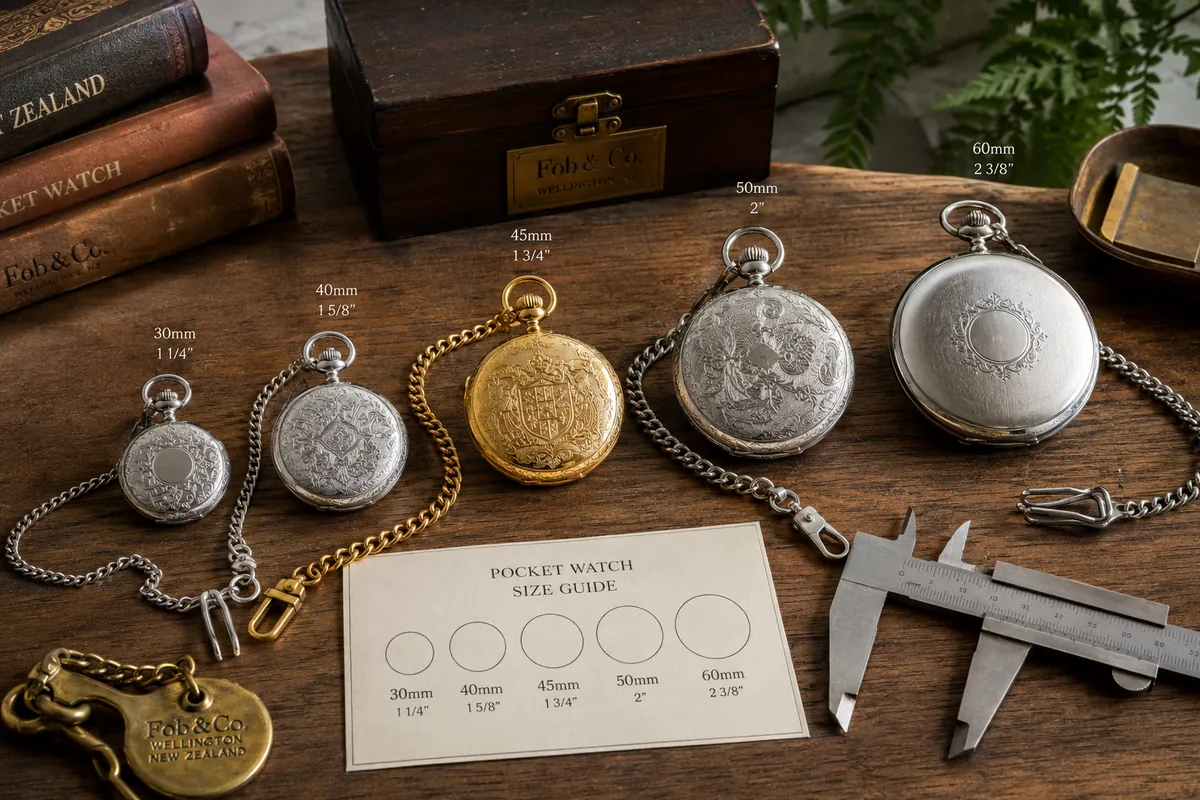
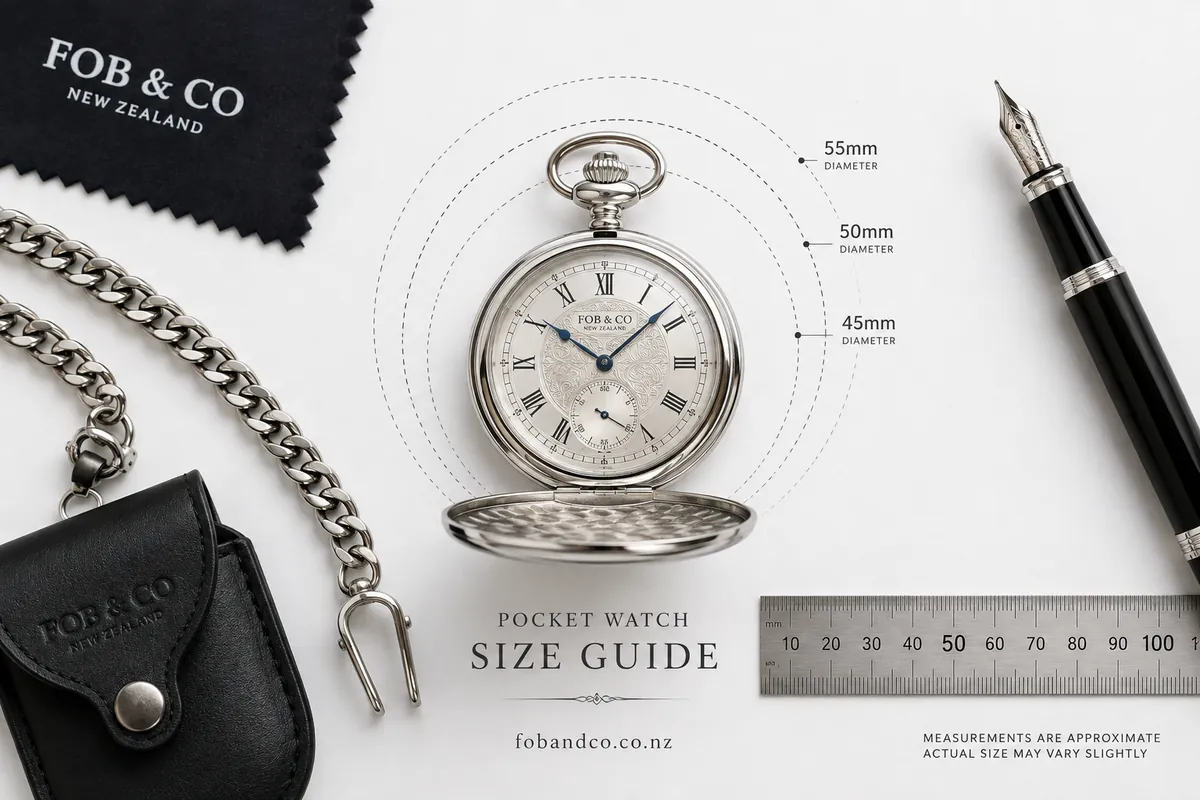
When someone asks about “pocket watch size” they’re usually talking about the case diameter, the width of the watch measured straight across the widest point of the front, not including the crown or the bow (the little loop the chain attaches to). It sounds simple until you start comparing listings, because sellers measure differently. Some quote lug-to-lug, some quote bezel width, some just eyeball it. In New Zealand, most pocket watches you’ll find, from vintage Waltham and Elgin pieces through to new reproductions, run somewhere between 40mm and 55mm across the case.
Older watches were sized using the “ligne” system, a French unit equal to about 2.26mm, which is why you’ll see American movements described as “16 size” or “18 size” rather than in millimetres. An 18-size movement measures roughly 45.6mm, and a 16-size sits closer to 43mm. Once you know that, a lot of the confusing vintage listings start making more sense. Modern watches sold here skip the ligne talk entirely and just list millimetres, which is a relief.
Size matters for three practical reasons: whether it fits your pocket without printing through the fabric, whether the chain and bow can take the weight without stressing the lug, and whether you can actually read the dial at arm’s length. A 55mm case looks fantastic sitting in a display case but feels like a hockey puck in a waistcoat pocket. Browse the full range of pocket watches and fob watches and you’ll notice the sizing spread across the collection is deliberate, not accidental.
How to Choose the Right Case Size
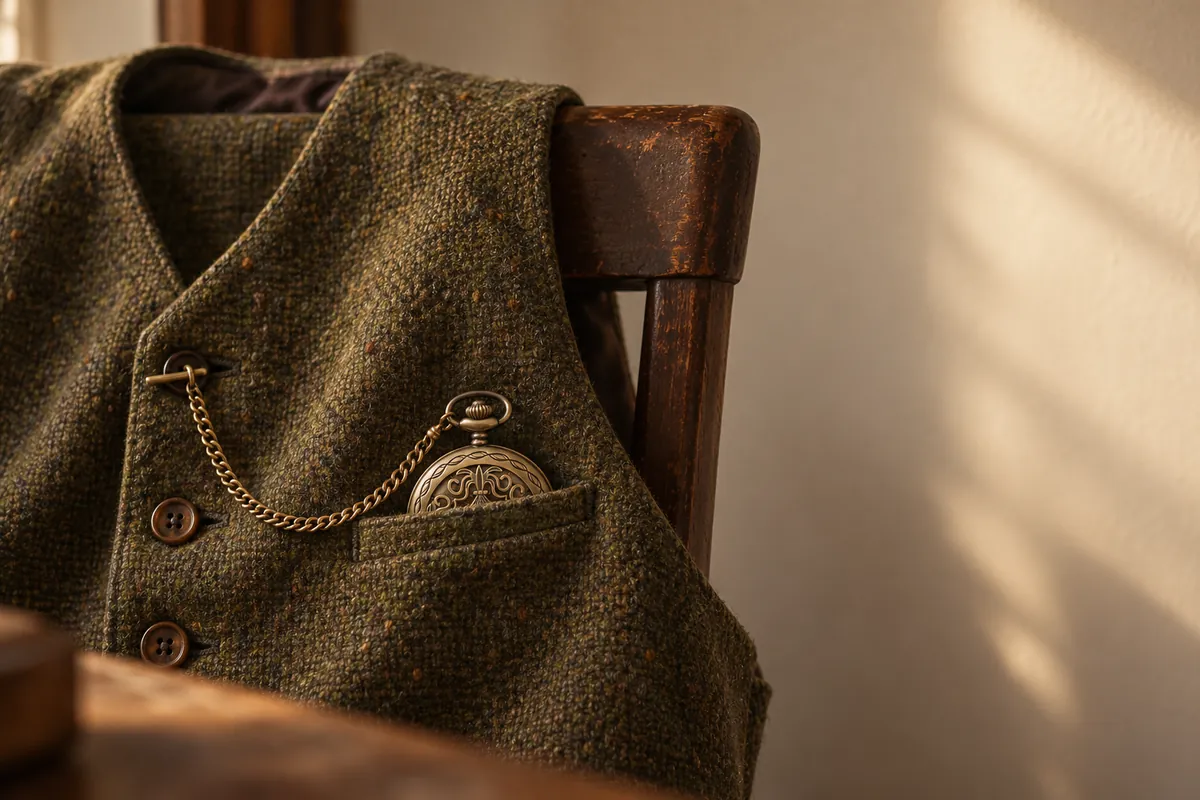
Start with where you’re actually going to carry it. A waistcoat pocket (the small one on a three-piece suit) typically has an opening around 10 to 12cm wide and maybe 8 to 9cm deep. A case over 50mm will sit proud of the pocket edge and catch on everything. If you’re wearing yours mostly with a waistcoat for weddings or formal events, 42mm to 46mm is the practical range, and it’s also why so many grooomsmen sets land in that bracket.
Trouser fob pockets (the small watch pocket built into some tailored trousers, or a standard trouser pocket if you’re not that fussy) give you more room, so 46mm to 50mm works fine there. If the watch is going into a jacket’s inside pocket instead, size matters less than thickness, since a chunky hunter case can print visibly through lighter fabrics even at a modest diameter.
Hand size plays a bigger role than most buyers expect too. If you’ve got smaller hands, a 50mm+ watch will feel unwieldy every time you pull it out to check the time, and the crown will sit awkwardly under your thumb when winding. Men with larger hands often find anything under 44mm looks and feels a bit toy-like. There’s no universal “correct” size here, it’s genuinely about proportion to you and to the outfit.
If you’re buying as a gift and you’re not sure of the recipient’s preference, the middle of the range is the safe bet. A 45mm open-face watch reads as classic and versatile rather than making a statement either way, which is exactly why it’s the most common size across pocket watches bought as gifts for dads and similar occasions where you want something universally wearable.
Top Styles and Case Options
The case style you pick changes how a given size actually feels, so it’s worth understanding the three main types before you lock in a diameter.
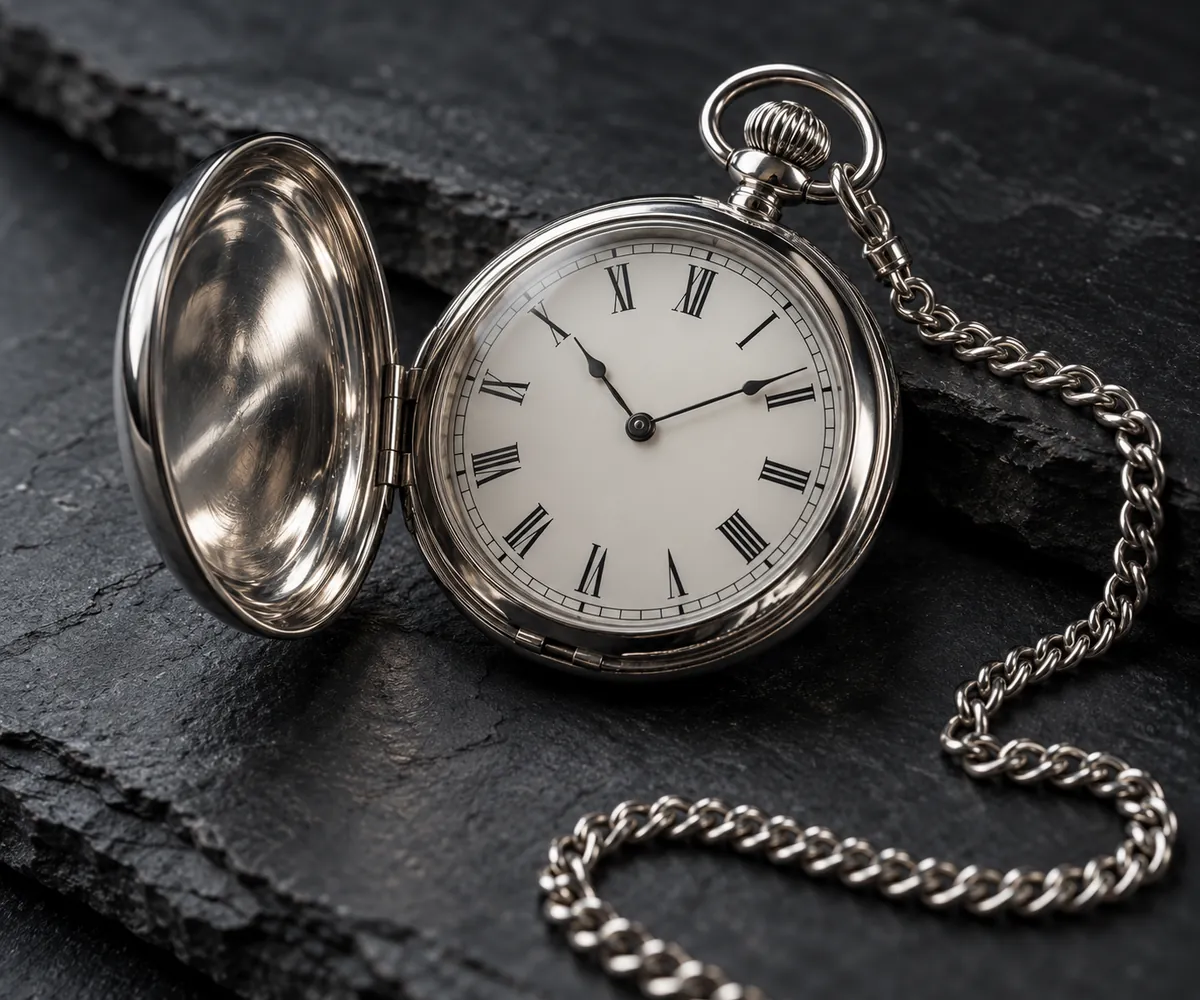
Open face cases have no cover over the crystal, so the dial is visible the instant you pull the watch out. These read as slimmer and less bulky than their millimetre measurement suggests, because there’s no hinged lid adding thickness at the edge. A 46mm open face carries more comfortably than a 46mm hunter.
Half hunter cases have a metal cover with a small glass window and often a mini dial set into it, so you can glance at the time without opening the case fully. They add a few millimetres of thickness compared to open face, and the extra engineering usually means the watch sits slightly heavier in the pocket. If you like the protective cover but don’t want the bulk of a full hunter, this is the middle path. Have a look through the half hunter pocket watches to see how the covered dial changes the overall footprint.
Full hunter cases have a complete hinged cover protecting the crystal entirely, which is the most traditional and, frankly, the most photogenic option for weddings and formal wear. That cover adds real thickness, so a 44mm full hunter can feel closer in hand-feel to a 48mm open face. If you’re set on this style, it’s worth sizing down slightly from what you’d normally pick. The full hunter pocket watch collection covers this end of the size and style spectrum well.
Material affects perceived size too, even at identical millimetre measurements. A black-cased watch tends to look smaller and more understated than the same case in gold, because gold catches light and draws the eye, making the whole piece feel more prominent on the body. If you’re after something that reads as elegant rather than showy at a bigger size, a rose gold or brushed finish softens the visual weight, while polished brass or bright gold amplifies it.
What to Consider Before You Buy
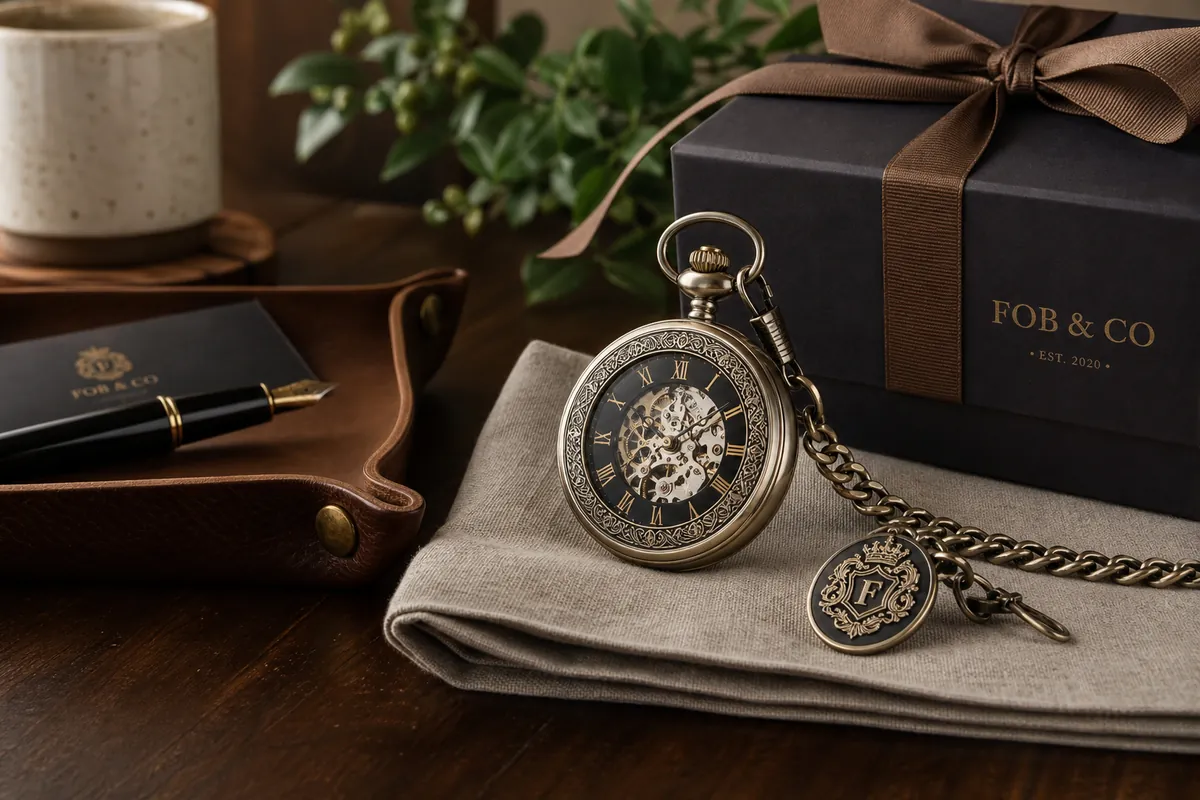
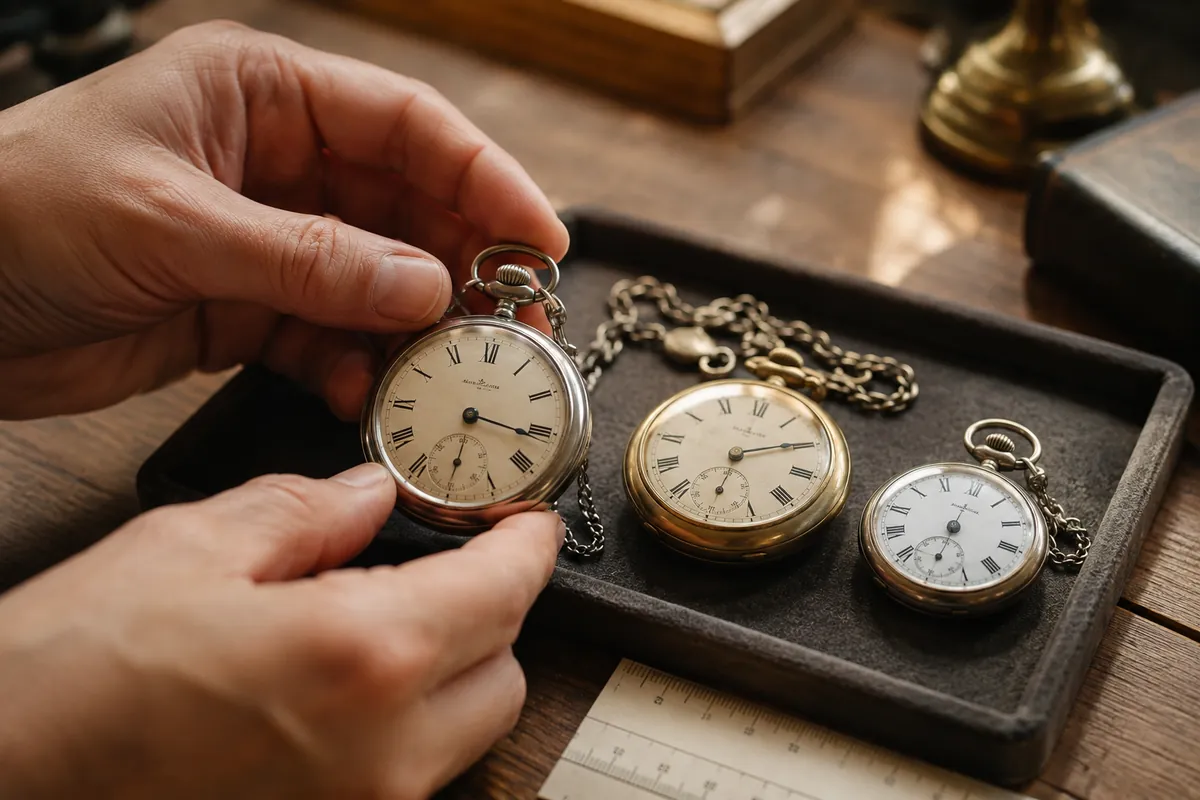
Chain length needs to match case size, and this is the bit people forget until the watch is already in their pocket. A standard single Albert chain runs about 30 to 36cm, which suits most 44mm to 48mm watches worn in a waistcoat pocket with the bar through a buttonhole. If you’ve gone bigger on the case, or you’re wearing the watch in a deeper trouser fob pocket, a double Albert (with a T-bar and two chain drops) gives you more length to play with and balances the visual weight of a larger case. Check the pocket watch chains range before you finalise a case, because the wrong chain length makes even a perfectly sized watch look unbalanced.
Weight is the other thing nobody mentions in size charts. Two watches at the identical 46mm diameter can differ by 30 grams or more depending on whether the case is solid brass, plated alloy, or stainless. A heavier case pulls at the buttonhole and the fabric of a waistcoat over a full day of wear, which matters if you’re buying for a wedding where the watch stays in the pocket for eight-plus hours. If comfort across a long day is the priority, lean toward the lighter end of a size bracket rather than the heaviest option available.
Movement type has a small but real effect on case depth. Mechanical hand-wind movements are generally slimmer than automatic movements of the same diameter, since automatics need room for the rotor. If you’re chasing the slimmest possible profile at a given width, a manual-wind movement in an open face case is your thinnest combination.
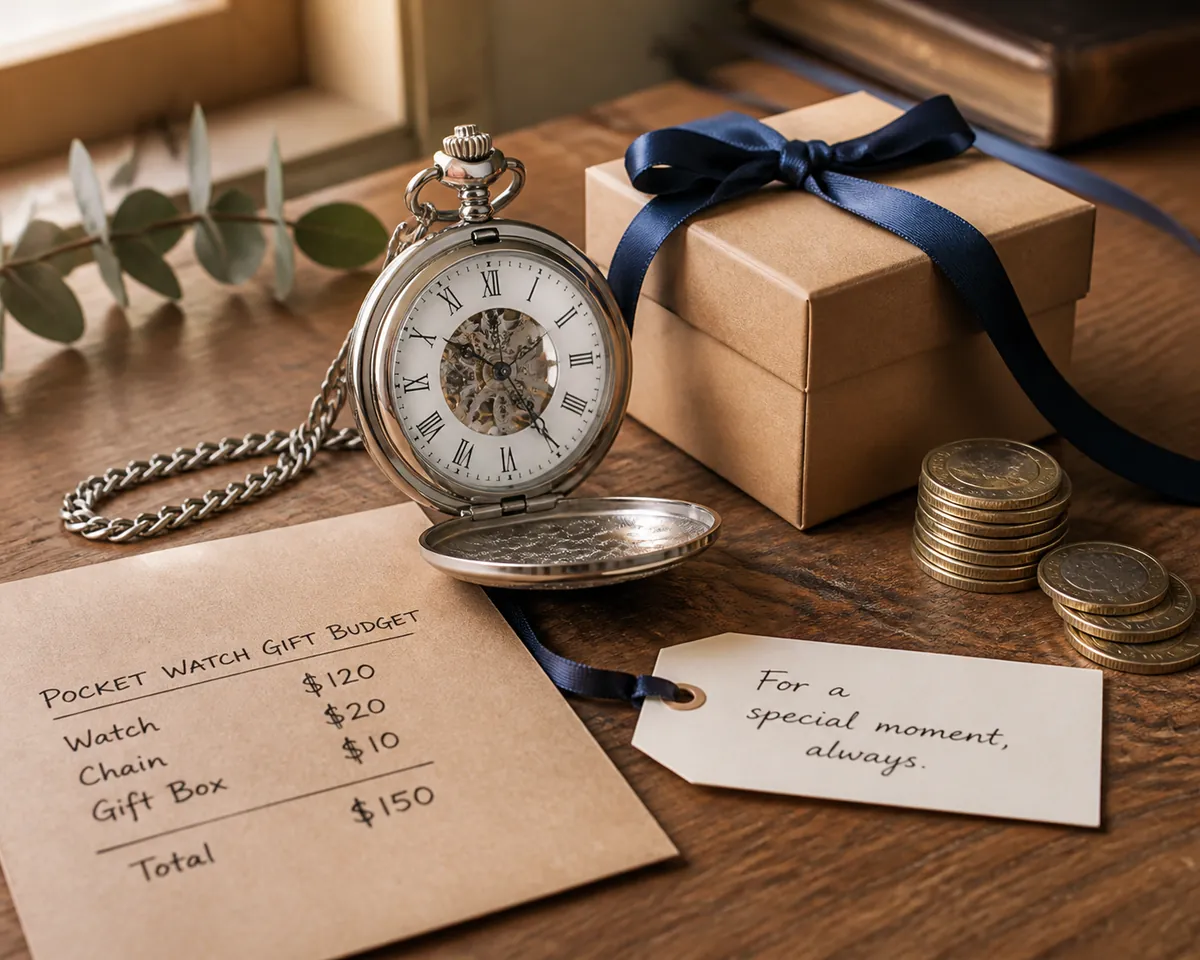
Budget shapes this conversation too. If you’re not fussed about vintage provenance and just want a well-sized piece for everyday carry or a gift, the clearance range and Classique final stock often carry the same case sizes as the newer collections at a lower price point, since they’re end-of-run pieces rather than lower-quality ones.
Tips From the Experts
Watchmakers and collectors tend to agree on one rule above all others: try before you commit to a size, even if “trying” just means holding a tape measure against your actual waistcoat pocket rather than trusting a size chart. The history of pocket watch sizing shows this has always been a practical trade-off between legibility and portability, going back to when 18-size movements were the working standard for railway conductors who needed a big, clear dial they could read at a glance.
Collectors sourcing vintage pieces also point out that case size and movement size aren’t always the same number, since some cases were built with extra clearance around a smaller movement for styling reasons. If you’re buying vintage rather than new, always ask for the outer case measurement specifically, not the movement size printed on the works.
On the styling side, menswear guides consistently note that a pocket watch should complement a waistcoat’s proportions rather than compete with the lapels or tie. A general rule from tailoring circles is that the watch shouldn’t be the widest visual element in the outfit’s upper half, which in practice keeps most formal-wear buyers in that 42mm to 48mm zone rather than reaching for anything oversized. For gifting occasions specifically, browse the wider gifts range, where sizing tends to be pre-curated toward that safe, universally flattering middle ground.
Finally, if you’re buying online rather than handling the piece first, always cross-check the listed diameter against something you already own. Pull out a coin, a $2 coin is 26.5mm, so two stacked roughly approximate a 50mm watch, and you’ll get a far better sense of real-world size than the number alone gives you.
Frequently Asked Questions
What is the best pocket watch size guide NZ buyers should follow?
For most buyers in New Zealand, a case between 44mm and 48mm hits the sweet spot for waistcoat pockets and everyday carry. If you’re after a dress piece for formal wear, size down toward 42mm; for a display or collector’s piece, 50mm and up gives you more presence.
How do I know which pocket watch size is right for me?
Measure the pocket you’ll actually be using, whether that’s a waistcoat, a trouser fob pocket, or a jacket pocket, and match the diameter to that space rather than to a chart. Hand size matters too, so if in doubt, hold a coin or ruler up to get a real sense of scale before ordering.
What should I look for when buying a pocket watch by size?
Check the case diameter (not the movement size), the case style since hunter cases add thickness at the same diameter, and the weight of the material. A heavier brass or gold-plated case at 48mm will feel noticeably different in the pocket than a lighter alloy case at the same width.
Are there budget-friendly pocket watch options in the right sizes?
Yes, the same size range you’ll find across the main collection also shows up in the clearance and final stock lines, since those are end-of-run pieces rather than smaller or lower-spec versions. It’s worth checking there first if budget is the main constraint and size is your priority.